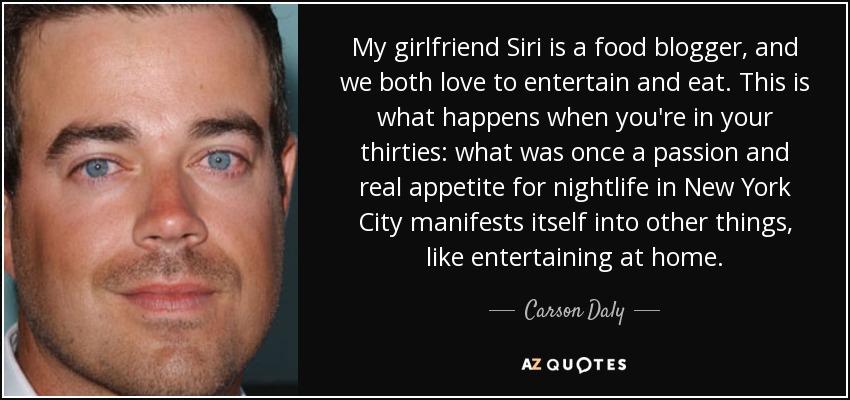
My girlfriend Siri is a food blogger, and we both love to entertain and eat. This is what happens when you're in your thirties: what was once a passion and real appetite for nightlife in New York City manifests itself into other things, like entertaining at home.
Every summer my husband and I pack our suitcases, load our kids into the car, and drive from tense, crowded New York City to my family's cottage in Maine. It's on an island, with stretches of sea and sandy beaches, rocky coasts, and pine trees. We barbecue, swim, lie around, and try to do nothing.
I represent Staten Island and Brooklyn, and not just that the financial services industry is important to the U.S., but is disproportionately important to New York City.
I grew up in New York City, where we played highly unorganized sports: stick ball, stoop ball, and the occasional game of baseball with no adult supervision.
I did not come from an academic background. My father was a smart man, but he had a fifth-grade education. He and all his friends were plumbers. They were all born around 1905 in great poverty in New York City and had to go to work when they were 12 or 13 years old.
I started writing it the day after Sept. 11. I was living in New York City. We didnt have any phone service and we didnt have any mail. Like a lot of writers do, I started to write in a voice that I missed.
In New York City, when they develop something, they never use the old buildings. It's so wasteful. Why not use what's there?
By the time I started high school, I knew I wanted to be a writer. After graduating from Smith College in Massachusetts, I moved to New York City and worked for the advertising agency J. Walter Thompson.
Those who know New York City primarily through tourism or mass culture may think of us natives as possessing certain shared characteristics, not all of them flattering. But the true, volatile charisma of New York lies in how balkanised it is.
During my eleven years as a New York City public school teacher, I saw firsthand the impact that poverty has on the classroom. In low-income neighborhoods like Sunset Park, where I taught, students as young as five years old enter school affected by the stresses often created by poverty: domestic violence, drug abuse, gang activity.
It was during my first trip to America in 1953 - thats when I learned to visit museums. I was then 26 years old. When I travel, the first thing I do is to visit museums. When I go to New York City, I usually go to Broadway to see the shows.
You could go to New York City, you could go to LA, you could go to the highest class studios in the world, they'll have all the bells and whistles, but it's not going to make your record any better.
I hate superheroes. I always hated superheroes. From the time I was a little kid, I could believe in a 50-foot gorilla trashing New York City before I could believe a guy would put on long tights and bat ears and go and fight crime. Like, the fantasy never made sense to me, on a basic level.
Overall, white men run America. From nuclear armaments to the filth and jeopardy of New York City subways to the cruel mismanagement of health care, is there anything to boast about?
Everywhere outside New York City is Bridgeport, Connecticut.
I haven't seen so much tippy-toeing around since the last time I went to the ballet. When members of the arts community were askedthis week about one of their biggest benefactors, Philip Morris, and its requests that they lobby the New York City Council on the company's behalf, the pas de deux of self- justification was so painstakingly choreographed that it constituted a performance all by itself.
When I was a kid, I used to live in New York City. There was a guy named Michael Alig. He used to throw parties. And a couple of times, I even worked for him and his crew, and handed out fliers, and had my super-high shoes on, and wearing silver Saran Wrap around my head or something. It's a world I was really comfortable in: a world full of individuals. I think what I like about that world - besides my own personal interests - is the individualism, the investment in the self.
I sometimes look at the careers of other... I guess I could call them contemporaries or maybe close artists; you know, the 4 or 5 guys who go to New York City and get a loft and work together and use each other as models and that sort of thing and wait for years and years to get married. Maybe I just wasn't that definite.
Certain kinds of things that the novel used to do, which was, "Oh, I'm living out here in West Nowhere, Nebraska and I'm curious how the upper class in New York City lives, I guess I'll read a novel about it." We don't have to do that now. You just turn on the TV. Turn on Lifestyles Of The Rich And Famous. You can get that information anywhere. Novels don't have to do that anymore.
Speaking of Margaret Sanger, Grandson Alexander Sanger, head of Planned Parenthood of New York City, said: She made people accept that women had the right to control their own destinies.
It's a big change for a country boy like me, to be in the limelight in New York City. It was most definitely a tough adjustment.
There's very little you're not exposed to in New York City, in terms of ideas and physical things - sights, sounds, smells, different kinds of people. But one good thing about growing up fast is you get over it fast, too.
I happened to write a book about the stuff I've been involved in over the years. It just so happened that my profession is that I was a cop in the New York City Police Department. I guess people thought it was pretty interesting to have these two things meshed together. My life is pretty boring, I don't know why they're doing this. It's fun.
I've worked with the Warrens. For about 20 years. I was really good friends with Ed. Ed and Lorraine. We went our separate ways, there were a few differences. In their organization, being that they were from Connecticut, I started the New York City chapter of the organization and handled things in New York. But eventually I was out on my own. But I've been friends with them for a long time.
In the United States, you can put on a cowboy hat and join the country-western neighborhood. If you're down below 14th Street in New York City, that's bohemian; that's left-wing.
Follow AzQuotes on Facebook, Twitter and Google+. Every day we present the best quotes! Improve yourself, find your inspiration, share with friends
or simply: