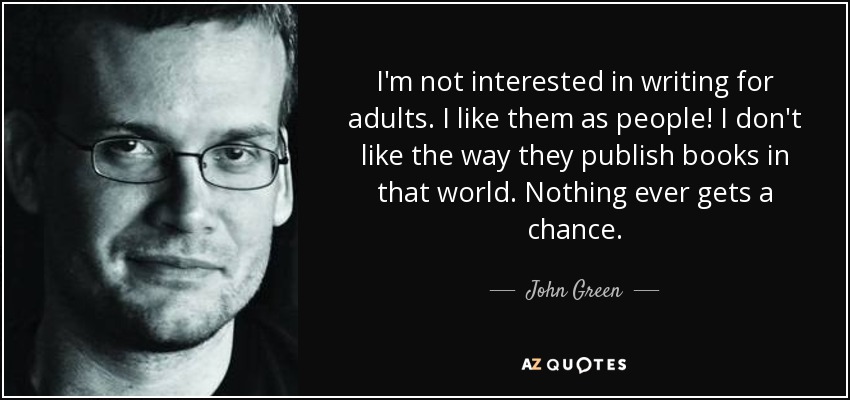
I'm not interested in writing for adults. I like them as people! I don't like the way they publish books in that world. Nothing ever gets a chance.
Journalists who make mistakes get sued for libel; historians who make mistakes get to publish a revised edition.
Can't publish. Don't rhyme, don't scan.
If anyone ever wonders why there's nothing coming from me, it's not my fault. I'm doing the work. No, I haven't deteriorated or gone insane. Suddenly, I just can't get anything into print. And apparently I'm not alone in this. There are people of very high standing, authors who are having problems. So I have been told. In my own case, the more disturbing element is the editor-in-chief who said to me, "I think this book is terrific. It ought to be in print. I can't publish it -- I've been told I mustn't." The indication is that I'm not writing what people want to read, but I never did.
The dissemination of the individual's opinions on matters of public interest is for us, in the historic words of the Declaration of Independence, an 'unalienable right' that 'governments are instituted among men to secure.' History shows us that the Founders were not always convinced that unlimited discussion of public issues would be 'for the benefit of all of us' but that they firmly adhered to the proposition that the 'true liberty of the press' permitted 'every man to publish his opinion'.
Andrea Leadsom promises to publish tax return tomorrow if she gets on ballot - it's boring.
For a while I never show anybody what I'm writing, and during that time I need the feeling that publishing is only an option. I might publish this, I might not. I think if I had to publish it, I might panic.
For seven years I wrote and published my texts on the Internet and no Arab festival invited me and no Arab publishing house wanted to publish my books, and I wasn't known in the Western world because of my political positions.
There hasn't been a lot written about it in the Western media. But in the Arab world, and Western Asia as a whole, Baghdad was always known as a famously bookish, intellectual city. There's an old saying that Cairo writes, Beirut publishes, and Baghdad reads.
I always revise when I publish in a book. So versions in magazines are sometimes slightly different.
I don't know if there are topics that I unconsciously avoid, but as soon as they pop up in my writing, I try to take on those topics, whether or not I publish the poems.
After my marriage ended, I had an urge to skip that part of my life completely in terms of poetry, not publish anything at all about it.
I heard a story the other night about an editor who visited the Iowa Workshop and, when asked what sorts of books she published, replied, "Classic books." One of the students asked her, "You mean like Kafka?" Apparently she said, "Oh, I don't think I would publish Kafka."
I had good relationships with stores. And I was like, "All right, I'll self-publish it. But I'm only going to do 1,000."
For me the question that you have to ask, about any magazine, is whether it's needed, whether it's publishing things that no one else could publish, or publish equally well. So there's that.
When I was a book editor, I got used to being told that my tastes were dark or edgy. These are not words that would've occurred to me, but I was told that enough that I have to believe it's true - that I like things that some other people find off-putting or upsetting. My job is to publish stuff that I really, really care about. That might mean that it doesn't sit well with everybody.
Basically, I've reached the point where I've lost any direct relationship to any of the editors I used to have. I suspect I'll have to pay to publish this myself, and I think a lot about about putting out fifty copies. I used to think about hogwash like my legacy and silly things like that. But I feel like if I never have another book out, I've done okay, I've had like twelve or thirteen little books, and I won't be upset about this on my death bed.
As my editor had no desire to frighten readers with the Romanian pages, he had them translated and published the whole thing in French in 1984. It was only years later, in Romania, that I was able to publish the book as I wrote it.
I do believe that the collapse of the traditional media is catastrophic for our democracy, but I wasn't about to mythologize it. I understand its structural flaws, and the lies it tells, which are primarily, but not always, the lies of omission, and I wasn't going to leave that out. Knopf offered to publish the book but they said that an editor was going to "take out all the negativity," which, of course, I wasn't going to accept. I had been paid half my advance, and I had Nation Books buy the manuscript for that half.
I would never do a printed memoir. I've been asked to publish a memoir from years by different publishers and literary agents. I think it wouldn't be great for me because all I'd really want to talk about it music and I'd rather just play it.
It's interesting to me that really one of the first things she [Eleanor Roosevelt]did as First Lady was to collect her father's letters and publish a book called The Letters of My Father, essentially, hunting big game, The Letters of Elliott Roosevelt. And it really was an act of redemption, really one of her first acts of redemption as she entered the White House. She was going to redeem her father's honor. And publishing his letters, reconnecting with her childhood really fortified her to go on into the difficult White House years.
When email and the Internet came along, I never publish an email address. I just stuck with this P.O. Box address.
Nobody wanted to publish a book about fairies; they said people wouldn't be interested. Luckily, I discovered Lady Cottington and her pressed fairies, which revived a huge amount of interest in fairies, so I could go ahead and do the book I wanted to do.
So the aim for the press was a mixture of things: to publish under-represented writing, which is an intersection of original language, style, content, and often its author's gender. To publish it properly, in a way that makes it clear that this is art, not anthropology. To spotlight the importance of translation in making cultures less dully homogenous.
Khairani Barokka is a writer, spoken-word poet, visual artist and performer whose work has a strong vein of activism, particularly around disability, but also how this intersects with, for example, issues of gender - she's campaigned for reproductive rights in her native Indonesian, and is currently studying for a PhD in disability and visual cultures at Goldsmiths. She's written a feminist, environmentalist, anti-colonialist narrative poem, with tactile artwork and a Braille translation. How could I not publish that?
Follow AzQuotes on Facebook, Twitter and Google+. Every day we present the best quotes! Improve yourself, find your inspiration, share with friends
or simply: