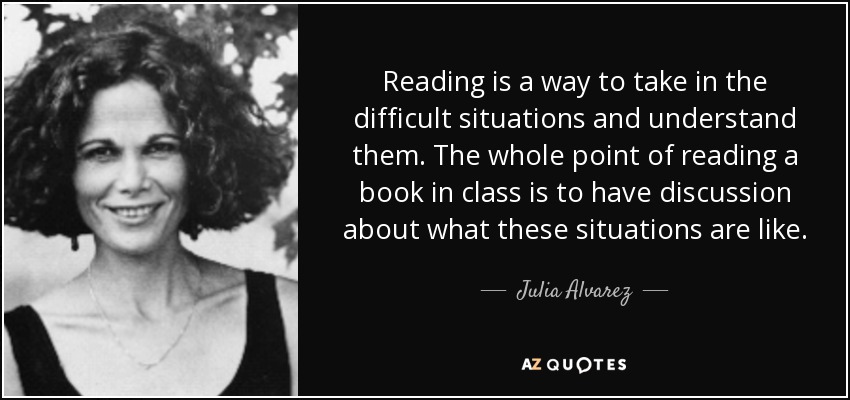
Reading is a way to take in the difficult situations and understand them. The whole point of reading a book in class is to have discussion about what these situations are like.
The elasticity of imagination and compassion is what writing and reading promote.
In a sense, journalism can be both helpful and detrimental to a writer of fiction because the kind of writing you need to do as a journalist is so different. It has to be clear, unambiguous, concise, and as a writer often you are trying to do things that are more ambiguous. I find that writing fiction is often an antidote to reading and writing too much journalism.
Reading and writing are the same thing; it's just one's the more active and the other's the more passive. They flow into each other.
No one is born a writer; literacy is a peculiar mode of being, but I was all about stories from a very early age, before reading.
I'm sitting in the bus station, minding my own business, reading 'Ta-Da!' magazine; a magazine by and for gay magicians, but that's a different story.
What President of the Airline is doing is, he's urging everyone to give up their frequent flyer miles for sick kids... But as I was reading this, there were two empty seats next to me. Why can't sick kids sit there? If they're so concerned with sick kids, shouldn't they have like a pen of sick kids next to the gate?
My dad is one of the funniest people I know. He's the sort of man who can make you laugh just by reading out of a telephone directory... He's a spastic.
Do you remember that kid that had sex with his high school teacher? I was reading online that he died today. He died from hi-fiveing.
Writing is a bit like swimming. You learn writing by doing it and you learn swimming by doing it. Nobody learns how to swim by reading a book about swimming and nobody learns how to write by reading a book about writing. If you want to learn how to write, write a lot and you will get better at it.
I very much enjoy reading other writers' diaries, mainly because it makes me ask myself: Are they like you? How do they think?
The more developed your abs, the less time you've spent reading.
It was really hard coming to terms with the Nazi history. Then in my twenties I was traveling to Germany. There was a lot of poetry activity and some of my first readings abroad and trying to relate with people my own age there and what they were discovering and learning had to examine in terms of their backgrounds. Then so many of my friends had family who had either perished in the holocaust or survived in the holocaust. It was very palpable.
If you are not highly educated, you will need to abandon your anxiety and fear of reading and doing research.
If you really want people to pay attention to how you feel, you need to express your feelings in language that's worth reading.
I often notice how students can gain the capacity to use certain critical methodologies through engaging with very different texts - how a graphic novel about gentrification and an anthology about Hurricane Katrina and a journalistic account of war profiteering might all lead to very similar classroom conversations and critical engagement. I'm particularly interested in this when teaching law students who often resist reading interdisciplinary materials or materials they interpret as too theoretical.
When I re-read the Odyssey, it felt like I was reading PD James or Minette Walters - you feel that you are sharing in something that hundreds of millions of people have read with love, and I think that this is worth holding onto. It is not a matter of canonical texts or elitism, which the universities are trying to make us wary about. It is about shared language and metaphor and experience and imagery and that is all good.
I love being home, reading the paper in the morning and having a cup of coffee, doing laundry, going grocery shopping and running daily errands. For me, it's important to have that balance in my life.
When I was young I was constantly reading walls; I took in everything written on walls, from love messages to political messages. It was my hobby and became my art.
I hope any poem I've ever written could stand on its own and not need to be a part of biography, critical theory or cultural studies. I don't want to give a poetry reading and have to provide the story behind the poem in order for it to make sense to an audience. I certainly don't want the poem to require a critical intermediary - a "spokescritic." I want my poems to be independently meaningful moments of power for a good reader. And that's the expectation I initially bring to other poets' writing.
One does well to put on gloves when reading the New Testament. The proximity of so much uncleanliness almost forces one to do this.
My mother was an English teacher before she became a full-time mom, and a huge proponent of reading, so she made sure I was an early and vigorous reader.
I don't remember being a keen reader, but apparently I was. My aunt told me that whenever I was teased for reading, I would say, "To each his own."
Reading a good comic is a creative act. Watching a film is often a more passive experience, and since I'm interested in engaging that conversational aspect of creativity, I'm trying to find ways of achieving that in my films.
I do believe that one's writing life needs to be kept separate from Po-Biz. Personally, I deal with this by not attending too many poetry readings, primarily reading dead poets or poems in translation, reading Poets & Writers only once for grant/contest information before I quickly dispose of it, and not reading Poetry Daily. Ever.
Follow AzQuotes on Facebook, Twitter and Google+. Every day we present the best quotes! Improve yourself, find your inspiration, share with friends
or simply: