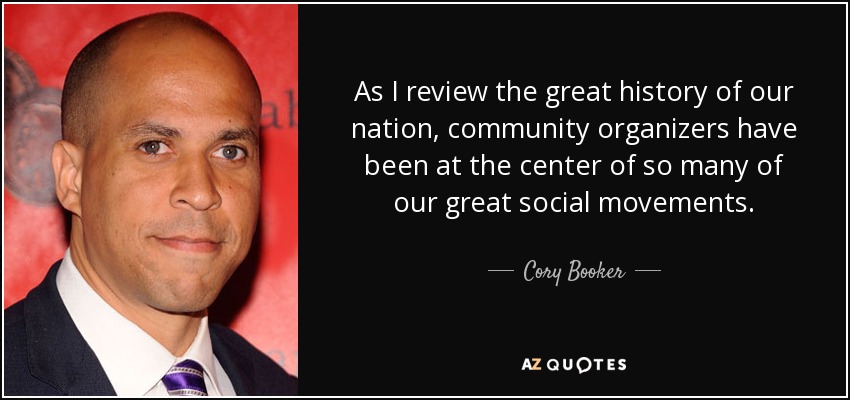
As I review the great history of our nation, community organizers have been at the center of so many of our great social movements.
I get a sick joy out of bad reviews. I don't read good reviews.
Reviews are destructive by their very nature.
We have just had the most amazing time. Every now and then, we'll come across a review where the person didn't like it and we're like, "What? Really? How could you not like it?" All of us like it so much, and we have such a great time at work. We've just been really blessed, and we're all standing here going, "Wait a minute, how did this happen?" It's been awesome.
The truth is that I'm never sure how any of my books will be received, and because I can be thin-skinned, I try not to read too many reviews when a book first comes out.
I never take any notice of reviews - unless a critic has thought up some new way of describing me. That old one about my lizard eyes and anteater nose and the way I sleep my way through pictures is so hackneyed now.
The true experimenters are there but no-one hears about them - the critical/review system tends to concentrate on the handful of 'major' writers and their promising successors; bookshops tend not to sell them; publishers don't promote them. It's the same fate as has befallen poetry.
Sometimes the critics review me harshly for not being critical of government but it's not me who has said I was political.
Maybe just as many women writers as male writers could be billed as the next great American writer by their publisher. Maybe book criticism sections could review an equal amount of female and male writers. Maybe Oprah could start putting some books by women authors in her book club, since most of her audience is women.
It's much easier to say negative things in a review.
Lazy reviewers look up other people's reviews and they write the same thing, so you get people writing crap based on crap.
The idea to make hotel reviews the form of the novel came first. So I just started writing hotel reviews and tried to come up with a consistent voice.
My review of 2001, the year, is the same as my review of 2001: A Space Odyssey. It went on too long, it was hard to follow, and you could only enjoy it if you were really, really, *really* stoned.
I live in the house bad reviews built.
Even if individual researchers are prone to falling in love with their own theories, the broader process of peer review and institutionalized skepticism are designed to ensure that, eventually, the best ideas prevail.
And there's so much extra material. I mean, I've certainly read as you asked about do I read reviews and stuff, like people are like none of the jokes in the trailers are like in the movie. And it's like and we have whole sequences and scenes that weren't in the movie.
I don't want any description of me to be accurate; I want it to be flattering. I don't think people who have to sing for their supper ever like to be described truthfully - not in print anyway. We need to sell tickets, so we need good reviews.
Thanks to the critics and thanks to the Emmys, we got all sorts of great reviews and notices and awards, at the start. Part of it is that it's great fortune to have something to live up to, but as creative people, we all have to just put that aside and go forward, make the best product we can, have as joyous of an experience as we can, and really remember that the spirit of this was to surprise the fans with something that they didn't see coming.
There's always a crisis somewhere, and you get the satisfaction of solving the problem. And then, there's always the mystery of whether a program will work or not, and waiting for the reviews or seeing what the audience figures are.
If one writing contributed more than any other to the framework in which this work Sowell's Knowledge and Decisions developed, it would be an essay entitled 'The Use of Knowledge in Society,' published in the American Economic Review of September 1945, and written by F. A. Hayek . . In this plain and apparently simple essay was a deeply penetrating insight into the way societies function and malfunction, and clues as to why they are so often and so profoundly misunderstood.
I am not so concerned with how many Rotten Tomatoes we have - although the good reviews are to be wished for, of course - but I have my hands full in the daily housekeeping of doing Maura right and being truthful to this experience.
I remember one review of The Office Christmas Special that compared it unfavourably to Dickens. What? You're saying I'm not as good as the greatest storyteller ever. Boo! Boo! I think I can live with that.
In my memoir, I admit that I've been as fearful of success as of failure. In fact, when 'Passages' was published, I so dreaded bad reviews that I ran away to Italy with a girlfriend and our children to hide out.
When a writer's whole being is poured into a piece of work, there is never enough. The feeling of finally getting to the end of a piece of work, of making it as good as you can at that moment, is more of a relief than anything else, and then you wait for reviews.
An important part of any focusing regimen is to set aside time at the end of the day - just before going to sleep - to acknowledge your successes, review your goals, focus on your successful future, and make specific plans for what you want to accomplish the next day.
Follow AzQuotes on Facebook, Twitter and Google+. Every day we present the best quotes! Improve yourself, find your inspiration, share with friends
or simply: