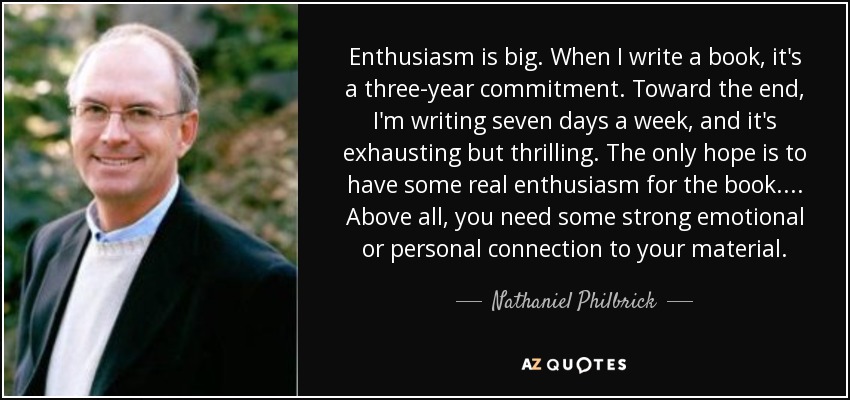
Enthusiasm is big. When I write a book, it's a three-year commitment. Toward the end, I'm writing seven days a week, and it's exhausting but thrilling. The only hope is to have some real enthusiasm for the book. ... Above all, you need some strong emotional or personal connection to your material.
When I began writing, it was a cosmic thing: Inspiration! Wham! Short spurts of time when I felt out of touch with reality, temporarily insane and the result: a song!
This is also an execellent time to ask this question: Did I get lazy and go for a quick rhyme?
I use three main tools in writing: instinct, hard work and dumb luck. Dumb luck is missing a train and, while you wait for the next one, writing a key word, line or verse. When this happens often enough you begin to believe in Fate.
I give myself the luxury of time in shaping a song. It's very common for me to work three months or more on a single song. Plotting takes time and effort, for there are many false turns. I fill up pages and pages with my mistakes, thereby eliminating them. Eventually a trail is broken through this mountain of mistakes. Sometimes it's as easy as putting eggs in a basket; other times it's like trying to pound a ton of sand into a diamond.
These days I keep a journal, so I'm constantly sketching down my thoughts, or lines that come to me...ideas for songs. And then when I have a moment to myself, I'll sit down with my guitar and open my journal, and start kind of massaging things together, and see if a song takes shape. Or sometimes, I'll just be hanging out with my guitar and come up with a chord progression or a lick, and that'll sort of sit around for a while waiting to marry itself to some words. So it's sort of haphazard and it's like...junk culture. I go around finding shiny objects and I glue them together laughs.
These days, I find I'm applying a little more patience to my process. If I look back on my work, I can see those songs I bailed on could have been better, that had those great two verses and then I kind of coasted from there. These days, if a song is giving me trouble, I put it aside and pick it up later, and keep doing that, for a year if I have to, until it takes shape.
My writing just kind of exists out there in the air-it's all sort of intended as spoken, or sung, word. So, to commit them to the page...that way was kind of intimidating to me, yet intriguing, to try to reflect the rhythms and connotations and emotions that you can deliver, speaking-wise, on a page.
Paul Simon once said that a songwriter's supreme challenge was being complex and simple at the same time-writing songs with lasting depth that are also simple enough to be memorable. Jimmy Van Heusen was a master at this kind of song. His music was complex, with deeply rich chord changes any jazzman can embrace, but also possessed catchy, crystalline melodies of exceeding sing-ability. His songs were meant to be sung, not just listened to, and they were sung by the best, with Frank Sinatra and Bing Crosby at the top of that list.
As a songwriter, you're allowed to write anything, and as a person, I am all colors in the rainbow. I've been through everything, you know, so I can write a positive song like 'Better Get to Livin'' because that's my attitude. But that doesn't mean I'm happy all the time. You can't be a deep and serious songwriter without feelings. You kinda have to live with your feelings out on your sleeve and get hurt more than most people. The fear I might get hurt means I might not be able to write another song.
Tom [Collins] was a great influence on me. He really pushed me...constantly demanded rewrites. And, as much as I despised them, it was the best thing that could have happened because he just wouldn't settle for less. It had to be right, and it had to be good.
I knew a lot of chords, but they weren't the chords that came with the melody that came with the idea I had for the song. Melodies are simple things. If you see a train wreck, there's a melody. If you see a little daisy blowing in the breeze, there's a melody.
Raksin worked for Alfred Hitchcock, about whom one of the most famous Raksin anecdotes was spoken. The legendary director declared he wanted no music at all for the oceanic Lifeboat, because he felt audiences would wonder where the music was coming from in the middle of the sea. Raksin said, Ask Hitch where the cameras are coming from.
I typically will work on a lyric in a three-ring binder. On the right side, I'll write the lyric, and on the left side, I put in alternate things...and things that might be alternates or improvements. I'll turn the page and do it again. I'll turn the page and do it again, or incorporate the improvements. Eventually, I end up with some material, and often it needs to be ordered.
But it's only after you've played it on the road 20 or 30 times that it becomes really finished and polished...and you realize what it means, and you get the phrasing right.
['Fire and Rain'] is sort of almost uncomfortably close. Almost confessional. The reason I could write a song like that at that point, and probably couldn't now, is that I didn't have any sense that anyone would hear it. I started writing the song while I was in London...and I was totally unknown.... So I assumed that they would never be heard. I could just write or say anything I wanted. Now I'm very aware, and I have to deal with my stage fright and my anxiety about people examining or judging it. The idea that people will pass judgment on it is not a useful thought.
We were on a tour, and there were some chord formations that were tough for me to play when I was a kid...it had become apparent that there was some stuff I wanted to do that [would require me] to learn how to do that. So I wrote the song and used some of these chord formations so I would have to play them. I thought it would be a great teaching vehicle for a while, and it was, but it ended up as a performance song.
I started with the chorus of that song, kind of like a fun bouncy thing to play, and then one of the lines popped up: 'I got things to do today, people to see, things to say.' I wrote about a dozen verses for it, but no song needs to be that long unless you're Bob Dylan. So when we recorded it I started to tear it down to some of the lines I thought were the funniest.
Some hit songs are really stupid, and who knows why they're hits. But a lot of hit songs are really good. I agree with Jim [Lauderdale] in that I think the really good ones are songs that when you hear it [sic]...there's just something about it that touches your heart, and you don't know why.
What inspires me is anxiety and the quest to try to change things in my life. ...I got addicted to endings and beginnings and to the idea of always moving around. ...Obviously, whenever you're going through something that's the best time to create, if you're going through something amazing, or horrible, or nothing at all you should be creating. Unfortunately the songwriters of today generally torture themselves to make sure they're writing good songs and take it a little too seriously.
I wrote 'Millie's Cafe' driving out of Ft. Worth, Texas one time. I was in a dust storm in my old bus. Beer inside. It was like a sailboat, you know...we couldn't see anything. Some things about Texas are so different than Ontario. I was just thinking about how different it is from where I live and, you know, whatever happens to inspire a song happened.
I think Bruno Mars is a great example of a great voice and classic songwriting with a twist that makes it contemporary. I think he's done a great job of it. I think Katy Perry has undeniable songs for what she does, for that pop market. And, if we're talking in the truly pop market, I would say those two.
I love music, so if I wasn't singing, I would probably still be working in the music industry. I love songwriting, so I'd probably be a songwriter.
Songwriting is hard - it's so easy to fall into the same traps. It's not like I wake up and songs flow out of me.
Before I went on stage at Kyle Hutton's Real Life Real Music Festival, I heard one of his songwriting students, Abbey Hirvela, sing; she was in the poet's saddle and riding that horse like she owned it. She was good! I probably ruined her by showing her how to make an E chord without the 3rd though.
Follow AzQuotes on Facebook, Twitter and Google+. Every day we present the best quotes! Improve yourself, find your inspiration, share with friends
or simply: