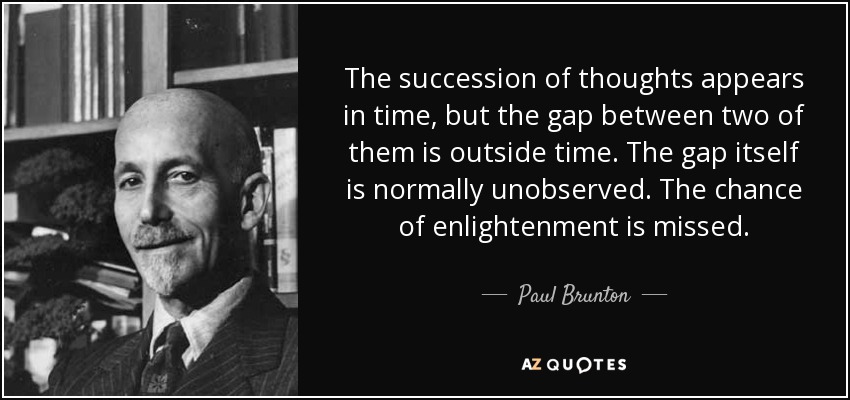
The succession of thoughts appears in time, but the gap between two of them is outside time. The gap itself is normally unobserved. The chance of enlightenment is missed.
All music is nothing more than a succession of impulses that converge towards a definite point of repose.
Evolution on the large scale unfolds, like much of human history, as a succession of dynasties.
I have devoted my whole life to the study of Nature, and yet a single sentence may express all that I have done. I have shown that there is a correspondence between the succession of Fishes in geological times and the different stages of their growth in the egg,-this is all. It chanced to be a result that was found to apply to other groups and has led to other conclusions of a like nature.
Seeing there are many who think they hold the opinions of Christ, and yet some of these think differently from their predecessors, yet as the teaching of the Church, transmitted in orderly succession from the apostles, and remaining in the Churches to the present day, is still preserved, that alone is to be accepted as truth which differs in no respect from ecclesiastical and apostolica tradition.
And if the years vanish in their course, they are still only successions of days that pass right through us as we pass through them in order to seek constantly what You have to show us... to remain constantly in Your embrace, just as the whole of time remains in the embrace of eternity.
The universe, that vast assemblage of every thing that exists, presents only matter and motion: the whole offers to our contemplation, nothing but an immense, an uninterrupted succession of causes and effects.
I can't stand to sing the same song the same way two nights in succession. If you can, then it ain't music, it's close order drill, or exercise or yodeling or something, not music.
Sciences usually advances by a succession of small steps, through a fog in which even the most keen-sighted explorer can seldom see more than a few paces ahead. Occasionally the fog lifts, an eminence is gained, and a wider stretch of territory can be surveyed-sometimes with startling results. A whole science may then seem to undergo a kaleidoscopic rearrangement, fragments of knowledge sometimes being found to fit together in a hitherto unsuspected manner. Sometimes the shock of readjustment may spread to other sciences; sometimes it may divert the whole current of human thought.
The maxim of science is simply that of common sense-simple cases first; begin with seeing how the main force acts when there is as little as possible to impede it, and when you thoroughly comprehend that, add to it in succession the separate effects of each of the incumbering and interfering agencies.
Entropy theory, on the other hand, is not concerned with the probability of succession in a series of items but with the overall distribution of kinds of items in a given arrangement.
Combining in our survey then, the whole range of deposits from the most recent to the most ancient group, how striking a succession do they present:- so various yet so uniform-so vast yet so connected. In thus tracing back to the most remote periods in the physical history of our continents, one system of operations, as the means by which many complex formations have been successively produced, the mind becomes impressed with the singleness of nature's laws; and in this respect, at least, geology is hardly inferior in simplicity to astronomy.
In Aristotle the mind, regarded as the principle of life, divides into nutrition, sensation, and faculty of thought, corresponding to the inner most important stages in the succession of vital phenomena.
Dear Sir: Yours of the 24th. asking 'the best mode of obtaining a thorough knowledge of the law' is received. The mode is very simple, though laborious, and tedious. It is only to get the books, and read, and study them carefully. Begin with Blackstone's Commentaries, and after reading it carefully through, say twice, take up Chitty's Pleading, Greenleaf's Evidence, & Story's Equity &c. in succession. Work, work, work, is the main thing.
It is impossible to read the history of the petty republics of Greece and Italy without feeling sensations of horror and disgust at the distractions with which they were continually agitated, and at the rapid succession of revolutions by which they were kept in a state of perpetual vibration between the extremes of tyranny and anarchy . . . great improvement . . . were either not known at all, or imperfectly known to the ancients.
The greatest marvel is not in the individual. It is in the succession, in the renewal and in the duration of the species that Nature would seem quite inconceivable. This power of producing its likeness that resides in animals and plants, this form of unity, always subsisting and appearing eternal, this procreative virtue which is perpetually expressed without ever being destroyed, is for us a mystery which, it seems, we will never be able to fathom.
Time, which measures everything in our idea, and is often deficient to our schemes, is to nature endless and as nothing; it cannot limit that by which alone it had existence; and as the natural course of time, which to us seems infinite, cannot be bounded by any operation that may have an end, the progress of things upon this globe, that is, the course of nature, cannot be limited by time, which must proceed in a continual succession.
Nature is the system of laws established by the Creator for the existence of things and for the succession of creatures. Nature is not a thing, because this thing would be everything. Nature is not a creature, because this creature would be God. But one can consider it as an immense vital power, which encompasses all, which animates all, and which, subordinated to the power of the first Being, has begun to act only by his order, and still acts only by his concourse or consent ... Time, space and matter are its means, the universe its object, motion and life its goal.
Poetry is a succession of questions which the poet constantly poses.
In the final, the positive, state, the mind has given over the vain search after absolute notions, the origin and destination of the universe, and the causes of phenomena, and applies itself to the study of their laws - that is, their invariable relations of succession and resemblance. Reasoning and observation, duly combined, are the means of this knowledge. What is now understood when we speak of an explanation of facts is simply the establishment of a connection between single phenomena and some general facts.
Thus the great drama of universal life is perpetually sustained; and though the individual actors undergo continual change, the same parts are ever filled by another and another generation; renewing the face of the earth, and the bosom of the deep, with endless successions of life and happiness.
Who ... is not familiar with Maxwell's memoirs on his dynamical theory of gases? ... from one side enter the equations of state; from the other side, the equations of motion in a central field. Ever higher soars the chaos of formulae. Suddenly we hear, as from kettle drums, the four beats 'put n=5.' The evil spirit v vanishes; and ... that which had seemed insuperable has been overcome as if by a stroke of magic ... One result after another follows in quick succession till at last ... we arrive at the conditions for thermal equilibrium together with expressions for the transport coefficients.
This success permits us to hope that after thirty or forty years of observation on the new Planet [Neptune], we may employ it, in its turn, for the discovery of the one following it in its order of distances from the Sun. Thus, at least, we should unhappily soon fall among bodies invisible by reason of their immense distance, but whose orbits might yet be traced in a succession of ages, with the greatest exactness, by the theory of Secular Inequalities.
It is only by practicing through a continual succession of agreeable and disagreeable situations that we acquire true strengths. To accept that pain is inherent and to live our lives from this understanding is to create the causes and conditions for happiness.
We live in succession, in division, in parts, in particles. Meantime within man is the soul of the whole; the wise silence; the universal beauty, to which every part and particle is equally related, the eternal ONE. And this deep power in which we exist and whose beatitude is all accessible to us, is not only self-sufficing and perfect in every hour, but the act of seeing and the thing seen, the seer and the spectacle, the subject and the object, are one. We see the world piece by piece, as the sun, the moon, the animal, the tree; but the whole, of which these are shining parts, is the soul.
Follow AzQuotes on Facebook, Twitter and Google+. Every day we present the best quotes! Improve yourself, find your inspiration, share with friends
or simply: