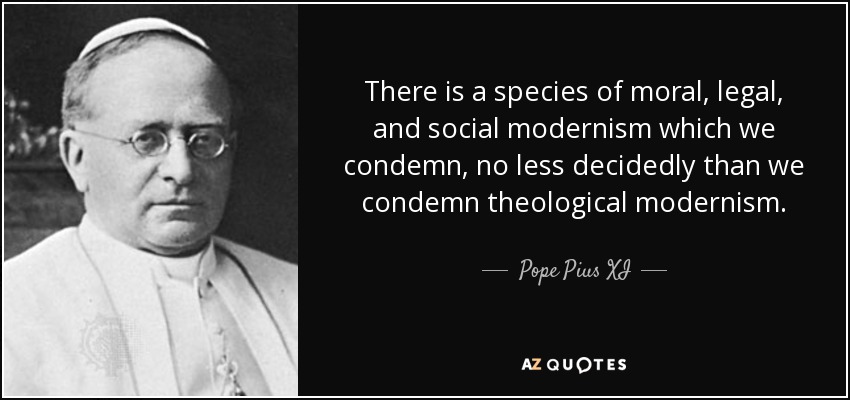
There is a species of moral, legal, and social modernism which we condemn, no less decidedly than we condemn theological modernism.
To understand a Bible text it takes an act of the Holy Spirit equal to the act that inspired the text in the first place. A revelation of the Holy Spirit in one glorious flash of inward illumination would teach you more of Jesus than five years in a theological seminary.
Divinity for the sake of the simple-minded is beautiful. Those theological assertions you write, say, or live by that you later feel foolish about, it means God still lives in you enough to tell you that they were indeed foolish. By mistakes you know you are alive.
There is a difference between criticizing people and criticizing a people's uninformed ideals. That is, unless one defines himself or others by their ideals, then he is offended, and usually offended secretly. Because oddly enough, this person is the same person quickest to resort to dismissive name-calling, such as 'bigot' or 'zealot'. And oddly enough, he is always the one, the 'open-minded' one, who adamantly protests for, not only himself, but others not to listen to any type of scholarly theological truth inherently for the sake of his own personal, moral beliefs.
Religious discord has lost her sting; the cumbrous weapons of theological warfare are antiquated: the field of politics supplies the alchymists of our times with materials of more fatal explosion, and the butchers of mankind no longer travel to another world for instruments of cruelty and destruction.
The contingency of history (both for life in general and for the cultures of Homo sapiens ) and human free will (in the factual rather than theological sense) are conjoined concepts, and no better evidence can be produced than the "experimental" production of markedly different solutions in identical environments.
The great writers to whom the world owes what religious liberty it possesses, have mostly asserted freedom of conscience as an indefeasible right, and denied absolutely that a human being is accountable to others for his religious belief. Yet so natural to mankind is intolerance in whatever they really care about, that religious freedom has hardly anywhere been practically realised, except where religious indifference, which dislikes to have its peace disturbed by theological quarrels, has added its weight to the scale.
And thus toleration produced not only mutual indulgence, but even religious concord. The superstition of the people was not embittered theological rancor.
Armenag Saroyan was the failed poet, the failed Presbyterian preacher, the failed American, the failed theological student.
The young man [Turgot] destined for an ecclesiastical career was placed within walls carefully designed to keep out all currents of new thought; his studies, his reading, his professors, his associates, all were combined to keep from him any results of observation or reflection save those prescribed: probably, of all means for stifling healthy and helpful thought, a theological seminary, as then conducted whether Catholic or Protestant, Jewish or Mohammedan, was the most perfect.
After Bruno's death, during the first half of the seventeenth century, Descartes seemed about to take the leadership of human thought... in promoting an evolution doctrine as regards the mechanical formation of the solar system... but his constant dread of persecution, both from Catholics and Protestants, led him steadily to veil his thoughts and even to suppress them. ...Since Roger Bacon, perhaps, no great thinker had been so completely abased and thwarted by theological oppression.
I firmly believe that the method which sets theological theories against scientifically ascertained facts, is fatal to the current theology and injurious to the spirit of religion; and that the method which frankly recognizes the facts of life, and appreciates the spirit of the scientists whose patient and assiduous endeavor has brought those facts to light, will commend the spirit of religion to the new generation, and will benefit--not impair--theology as a science, by compelling its reconstruction.
Appealing to his [Einstein's] way of expressing himself in theological terms, I said: If God had wanted to put everything into the universe from the beginning, He would have created a universe without change, without organisms and evolution, and without man and man's experience of change. But he seems to have thought that a live universe with events unexpected even by Himself would be more interesting than a dead one.
The Master was exceedingly gracious to university dons who visited him, but he would never reply to their questions or be drawn into their theological speculations. To his disciples, who marveled at this, he said, "Can one talk about the ocean to a frog in a well or about the divine to people who are restricted by their concepts?
Monotheism occupies so large a space in the view of modern minds, that it is scarcely possible to form a just estimate of the preceding phases of the theological philosophy.
At last, Mythic feeling and conscious perception no longer confront each other as antagonists but as allies. Passionate nationalism is no longer directed toward tribal, dynastic or theological loyalties, but toward that primal substance, the racially based nationhood itself. Here is the message which will one day melt away all dross, eliminate all that is base, and bring into being all that is noble.
If there is a time of judgment, instead of theological or institutional litmus tests, the only question asked about our life and spirituality will be "Did you love with abandonment?"
I have to try to remind people on both sides of the barque of Peter that there is room for us all and that we are not the first generation of Catholics to experience serious theological and pastoral differences of opinion. In fact, from the New Testament, strong leaders within the church disagreed openly. Eventually, the truly great ones found ways to heal conflicts and keep the Lord's flock united.
It is often lamented by the churchmen that Washington and Lincoln possessed little religion except that found in the word 'God.' All that can here be affirmed is that what the religion of those two men lacked in theological details it made up in greatness. Their minds were born with a love of great principles... There are few instances in which a mind great enough to reach great principles in politics has been satisfied with a fanatical religion... It must not be asked for Washington and Lincoln that, having reached greatness in political principles, they should have loved littleness in piety.
The Book of Revelation has all the authority, in these theological uplands, of military orders in time of war. The people turn to it for light upon all their problems, spiritual and secular.
[Recent evidence regarding quantum mechanics is] sufficient to rule out all theological options but one - the Bible's.
Orthodox Judaism is a thicket of detailed injunctions, Biblical commandments elaborated during centuries of prohibited proselytizing, functioning to limit interaction with outsiders. At the opposite extreme, Islam, still the most rapidly expanding of faiths, demands little immediate knowledge from those who would convert. The convert is permitted to enter and then to learn by participation, although there are plenty of detailed regulations and abstruse theological ideas to be pursued later, and the regulations do effectively separate believers from nonbelievers.
For God to be kept out of the classroom or out of America's public debate by nervous school administrators or overcautious politicians serves no one's interests. That restriction prevents people from drawing on this country's rich and diverse religious heritage for guidance, and it degrades the nation's moral discourse by placing a whole realm of theological reasoning out of bounds. The price of that sort of quarantine, at a time of moral dislocation, is - and has been - far too high.
The prevailing notion is that the state should be neutral as to religion, and furthermore, that the best way to be neutral about it is to avoid all mention of it. By this sort of logic, nudism is the best compromise among different styles of dress. The secularist version of 'pluralism' amounts to theological nudism.
I care not for the theoretical symmetry and impregnable logic of your moral code, I care not for the hoary respectability and traditional mysticisms of your theological institutions, I care not for the beauty and solemnity of your rituals and religious ceremonies, I care not even for the reasonableness and unimpeachable fairness of your social ethics,--if it does not turn out better, nobler, truer, men and women,--if it does not add to the world's stock of valuable souls,--if it does not give us a sounder, healthier, more reliable product from this great factory of men--I will have none of it.
Follow AzQuotes on Facebook, Twitter and Google+. Every day we present the best quotes! Improve yourself, find your inspiration, share with friends
or simply: