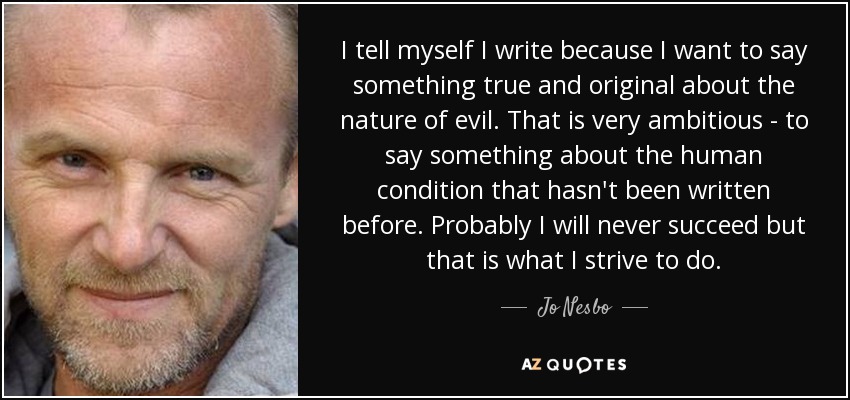
I tell myself I write because I want to say something true and original about the nature of evil. That is very ambitious - to say something about the human condition that hasn't been written before. Probably I will never succeed but that is what I strive to do.
I've written a song for Prince. I never showed it to Prince, but just to see if I could do it. At the time, when I sort of knew him, he was recording a song a day. I wondered if I could do that. So I wrote it.
I've written some great things. That's a gift, but there's consequences. Yeah, you get this great work, but you suffer. You really, really suffer.
I've always written about animals. I'm still trying to process why that is.
You're every love song ever written.
The Holy Spirit is no skeptic. He has written neither doubt nor mere opinion into our hearts, but rather solid assurances, which are more sure and solid than all experience and even life itself.
If you can stand to wait 24 hours before you decide the fate of what you have written - either good or bad - you're more likely to see that invisible thing that is invisible for the first few days in any new writing. We just can't know what all is in a sentence until there are several sentences to follow it. Pages of writing need more pages in order to be known, chapters need more chapters.
The picture alone, without the written word, leaves half the story untold.
What you're doing is putting into professional play the way that you relate to other people, the way that you analyze and relate to a written text, the way that you would persuade anybody to do anything. It has to do with listening, with humility and a sense of yourself.
I've been with Life now for seventeen years and I have written several articles for them and will be doing more writing and do at least two assignments a year besides my writing.
I've written probably over 200 songs that have a verse and a chorus and that's it.
Of course a politician's promise isn't worth the paper it's written on.
I've written something and I would like to have my first film directed by the time I'm 30.
The Wire,' I was such a fan of that show the first season - I think that's the best-written show on TV.
Basically everything I've done in art, I was in possession of when I was 20 years old. I use a waste retrieval method of working. I'll go back and use something that disgusted me 15 years ago but that I had enough sense to think about. Some artists change dramatically. I see my work more like history being written.
I've given some money to the scholarships in the District of Columbia, to the best students in D.C... many of the students have written me letters telling me they could not have afforded to go to college without the scholarship and money I've given them.
Mostly I work really unconsciously, and I think if the scenes are really well written, which they are, and if I just throw myself into it, I don't really think about it.
I haven't written my memoirs or let the television movie be made about my life.
I don't think anyone has written a great graphic novel.
Every pilot I've ever written, I've fallen deeply and madly in love with. It's the only way I work.
Conducting! A subject, truly, concerning which much might be written, yet scarcely anything of real importance is to be found in books.
Stories, as much as we like to talk about them, retrospectively, as emanations of theme or worldview or intention, occur primarily as technical objects when they're being written. Or at least they do for me. They're the result of thousands of decisions made at speed during revision.
It is not our job to apply laws that have not yet been written.
Dialogue that is written in dialect is very tiring to read. If you can do it brilliantly, fine. If other writers read your work and rave about your use of dialect, go for it. But be positive that you do it well, because otherwise it is a lot of work to read short stories or novels that are written in dialect. It makes our necks feel funny.
Writers who get written about become self-conscious. They develop a regrettable habit of looking at themselves through the eyes of other people. They are no longer alone, they have an investment in critical praise, and they think they must protect it. This leads to a diffusion of effort. The writer watches himself as he works. He grows more subtle and he pays for it by loss of organic dash.
Follow AzQuotes on Facebook, Twitter and Google+. Every day we present the best quotes! Improve yourself, find your inspiration, share with friends
or simply: