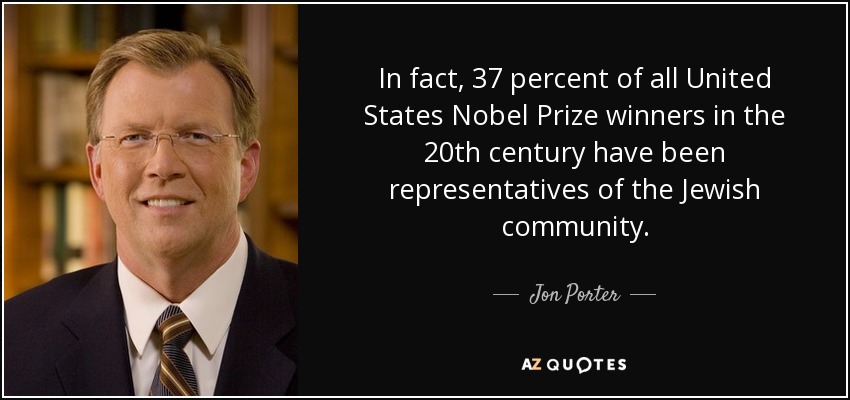
In fact, 37 percent of all United States Nobel Prize winners in the 20th century have been representatives of the Jewish community.
Jewish immigration in the 20th century was fueled by the Holocaust, which destroyed most of the European Jewish community. The migration made the United States the home of the largest Jewish population in the world.
We have a lot of long narrative poems written in the 20th century, but they're not very well known, and they're not read by very many people.
If something works for you, you continue to do it. I did a bunch of pictures for 20th Century Fox when Alan Ladd was over there, but I set the budgets so low that they'd approve and I'd deliver the film. They would have no say in it, which is the kind of arrangement I liked.
The 'realist' conception of continuing old-fashioned 'balance of power' politics may have been well founded in the past, but it is inconsistent with our increasing interdependent world. On moral grounds alone there can be no justification for the 20th century level of killing. To settle disputes without violence must become the primary goal of foreign policy for every nation.
When I was a kid, I looked at art as a way of blending everything. One of my favorite composers is Wagner - who coined the term "gesamtkunstwerk," or "total art work." That's what was going on in the 19th century, and the 20th century just kept it going.
I think if the United States gave anything to culture at large in the 20th century, the most important contribution made was the popular song.
The sexual revolution produced cultural convulsions that were unparalleled in the 20th century.
The sexual revolution produced cultural convulsions that were unparalleled in the 20th century. The female sex was historically sexualized and required to have orgasms for the first time. Sexual "deviants," particularly homosexuals, achieved partial emancipation.
When I write lyrics, I really do go into an automatic folk appropriation mode... I see the vernacular register of 20th century song as being a bunch of forms to adapt and reconfigure.
The end of World War I also marked the end of bourgeois culture. An inner emptiness developed that, in the 19th and 20th centuries, paved the way for two ideologies that dragged Europe and the world into an abyss and plunged it into a catastrophe.
Ironically, there is a history of black/Irish communion here in the states; Irish and African American brothers and sisters have often found common cause in fighting the bigotry both communities faced earlier in the 20th century. However, white skin privilege among the Irish separated them from blacks, who had no such advantage to fall back upon. The solution is to fight bigotry and racism wherever they appear, and to root out the forces of oppression as conscientiously as possible.
Angela Merkel embodies Germany's 20th century fate. It is not up to me to pass judgment on her place in history, but I believe that she is the chancellor of Germany's reconciliation with Europe. She stands for a Germany for whom globalization has been a success and which accepts its role in foreign and defense policy. I thought the way she dealt with the refugees was courageous. I think she is the chancellor of reconciliation.
When you study art history, you learn that there is very little that is completely new, and in many ways digital art is no different. I love to derive inspiration from all types of images: mosaics, hieroglyphics, petroglyphs, woven patterns in textiles, and needlework. There is a lot of very good "pixel" design work before the 20th century, like a 1760 sampler by Elizabeth Laidman that looks like a bitmap font.
I was interested in Armstrong to begin with because he is the most important figure in Jazz in the 20th Century. There's simply no question about it. I mean, if you're going to compare him to somebody, it's Shakespeare in terms of centrality of the tradition, in being at the beginning of it.
We African Americans have now spent the major part of the 20th Century battling racism
It's always amusing to look at how something early in the 20th century was written in anthropology and how it's written now. There's been an enormous shift in how it's done, but yet you can't put your finger on someone who actually did it
The experience of Somalia shows that famine in the late 20th century is not a consequence of a shortage of food. On the contrary, famines are spurred on as result of a global oversupply of grain staples.
We current justices read the Constitution in the only way that we can: as 20th-century Americans.
The 20th century taught us how far unbridled evil can and will go when the world fails to confront it. It is time that we heed the lessons of the 20th century and stand up to these murderers. It is time that we end genocide in the 21st century.
We all shared an admiration of Debussy both as a musician and as sort of an icon for the 20th century. It seemed like an interesting idea to go right back 100 years to find the source of some new ideas now.
The 20th century ended with a single surviving model of human progress.
The 20th Century was a bloodbath, and for all the frustrations and failures of the project to unify Europe, the last five decades have been periods of unprecedented peace, growth, and prosperity in Europe.
I think certain periods of history don't get dealt with because I think historians, and it's their job, but they look back and look for patterns. They look for sequences and they look for reasons, and certain periods of history don't fit with the general pattern of 1500 to the 20th century, during which there's the creation of the United States. At this time of 1814, two nations who would eventually become close allies were at war with each other, so it doesn't quite fit.
Comandante Fidel Castro is the greatest revolutionary of the 20th Century, bar none.
Follow AzQuotes on Facebook, Twitter and Google+. Every day we present the best quotes! Improve yourself, find your inspiration, share with friends
or simply: