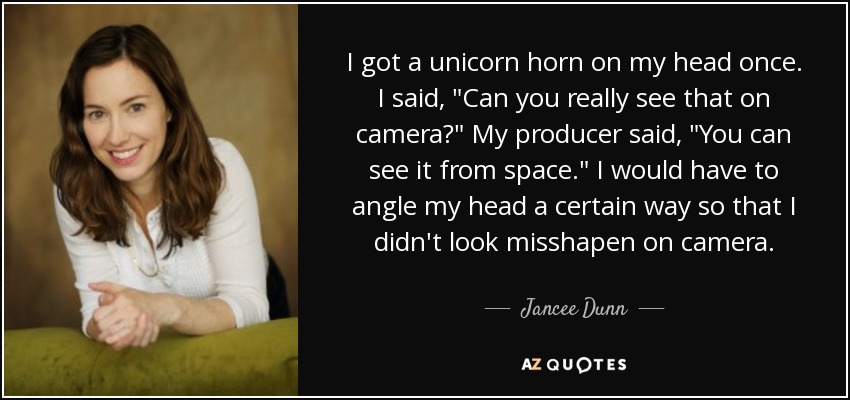
I got a unicorn horn on my head once. I said, "Can you really see that on camera?" My producer said, "You can see it from space." I would have to angle my head a certain way so that I didn't look misshapen on camera.
When you're directing you're kind of interested in the movie and the story and the characters. I just sort of prefer the really tough fighting and some of the other street fighting type moves. You know, where it's not just show. It's not dressing it up for the cameras too much. It's pretty down and dirty, the way it should be. That's something I like to do. I do that.
If a film is very clever and well-written, that's what gives you freedom as a director. Part of the freedom in directing, for me, is that I'm also the camera operator. That's the place where things are less rigid, where I can adjust as I go along.
In all my documentaries I did all the camera work, but in fiction I didn't want to do it myself. I think the machinery is so heavy and demanding that you would leave the actors alone for a long time.
When I make a documentary I shoot very little but I hang around with my camera for a long time. I look at the people for a long time through the loop and then when I see something interested then I shoot. I think that I have become very sensitive to these things.
I try to keep feeling what's going on and try to use the camera, the actors and the design to enhance those feelings. There's something really emotionally direct and honest about how I put the material with the images. You hope that the strength of mise-en-scene comes from an honesty towards the material. You also hire really well.
I've always thought that when anyone receives an award for acting they should always thank their fellow actors, because the only way you're going to deliver your best performance is when you have other good actors on the set supporting you and being very present for you even when the camera is not on them.
I first discovered YouTube while browsing the web, and then I found people just talking into their cameras. I never even knew it was a thing you could do. William Sledd was my first YouTube obsession. He was so unapologetically himself, and just had fun talking to his audience about things that interested him. I thought - if he could do it, why couldn't I?
When I was younger, I was reticent to be vulnerable on camera and everything I was doing was just a really finely honed defense mechanism from when I was a kid, and I was now using this to make a living on camera.
What very often happens when people make films about rich people, the camera is quite mesmerised by the opulence and quite theatrical in fact.
When the camera starts to roll, there is something of death about it.
If the FBI parks a van bristling with cameras outside your house, you are justified in closing your blinds.
If you invite someone into your front room you can't be surprised when there are suddenly people outside your windows with cameras.
The cameras are getting smaller, they're getting more versatile, and eventually, I'm sure you'll have a camera with lots and lots of things on it so you can alter the picture. You could alter perspective.
The word reality scared me. I just looked at reality as everybody follows me around with a camera, and I'm not that kind of person. I fought for my privacy in England. And I didn't see another way it could be done.
The camera can move, you can make the shots, blah blah blah, but as long as the actors are good, you have something.
Photography sees surfaces, it doesn't see space. We see space but the camera doesn't.
I came out of the womb looking for the camera angle
The axe is fifteen pounds. You have to make sure you don't hurt or hit someone. And hit the beats, because they have five cameras. It has to look real. That in itself becomes challenging because you have to learn it straight away.
Musicals and horror films can be very non-verbal and very pure cinema with movement. The camera is justified in being a character. It can really move and tell a story, and literally direct you to look here or there.
You have to understand where the camera needs to me. There were times where you were suddenly aware where the cameras were, then you were in a different place and it didn't feel like the same movie.
Of course, we're supportive of the gay and lesbian community. I've just never portrayed that on camera. Once I met Taylor [Schilling] I knew that it was going to be really comfortable and okay, but the nudity was a little bit of an issue for me.
I will never lose anything that an audience will miss.I turned things that were scripted as effects into in-camera stuff, which is sexier.
One of the things about working for an old school studio like Warner Bros. is that there is an institutional culture and institutional memory, in terms of production design, camera work, and directors who understand how to do this kind of thing.
The camera cannot leave the man, but the man can leave the camera. It's in the style of documentary where you make an agreement between a camera and a man and say, "I'm going to film you now."
Follow AzQuotes on Facebook, Twitter and Google+. Every day we present the best quotes! Improve yourself, find your inspiration, share with friends
or simply: