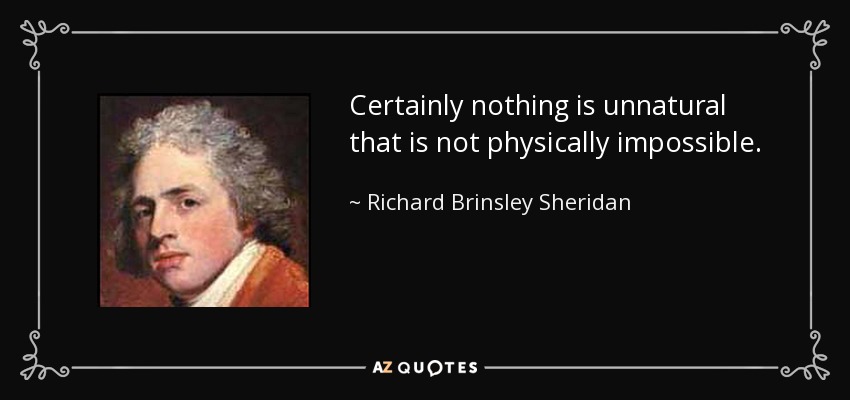
Certainly nothing is unnatural that is not physically impossible.
After all, this is a world of rock and water and air. It is elemental. It is not ours.
Through luminous and erudite readings of the texts, Hasana Sharp shows us how profound and radical is Spinoza's conception of nature and his claim that humans always remain part of nature, acting solely according to the same rules. She demonstrates the political consequences of adopting this perspective through a provocative intervention in contemporary feminist theory, while along the way opening promising avenues for future work in a variety of other fields, such as animal studies and ecology. This is a challenging and important book.
Starting from the very reasonable, but unfortunately revolutionary concept that social practices which threaten the continuation of life on Earth must be changed, we need a theory of revolutionary ecology that will encompass social and biological issues, class struggle, and a recognition of the role of global corporate capitalism in the oppression of peoples and the destruction of nature.
Food is about agriculture, about ecology, about man's relationship with nature, about the climate, about nation-building, cultural struggles, friends and enemies, alliances, wars, religion. It is about memory and tradition and, at times, even about sex.
Unlike television, reading does not swallow the senses or dictate thought. Reading stimulates the ecology of the imagination. Can you remember the wonder you felt when first reading The Jungle Book or Tom Sawyer or Huckleberry Finn? Kipling’s world within a world; Twain’s slow river, the feel of freedom and sand on the secret island, and in the depths of the cave?
I like to think (it has to be!) of a cybernetic ecology where we are free of our labors and joined back to nature, returned to our mammal brothers and sisters, and all watched over by machines of loving grace.
The structure of a software system provides the ecology in which code is born, matures, and dies. A well-designed habitat allows for the successful evolution of all the components needed in a software system.
For the Amahuaca, the Koyukon, the Apache, and the diverse Aboriginal peoples of Australia - as for numerous other indigenous peoples - the coherence of human language is inseparable from the coherence of the surrounding ecology, from the expressive vitality of the more-than-human terrain. It is the animate earth that speaks; human speech is but a part of that vaster discourse.
Waste not the smallest thing created, for grains of sand make mountains, and atomies infinity.
Ecology is often confused with environmentalism, while in fact, environmentalism often leaves out the fact that people, too, can be a legitimate part of an ecosystem.
Restoration ecology is experimental science, a science of love and altruism. In its attempts to reverse the processes of ecosystem degradation it runs exactly counter to the market system, to land speculation, to the whole cultural attitude of regarding the Earth as commodity rather than community. It is a soft-souled science.
Each portion of matter may be conceived of as a garden full of plants, and as a pond full of fishes. But each branch of the plant, each member of the animal, each drop of its humors, is also such a garden or such a pond.
All around us, aspects of the modern world - diet, exercise, medicine, art, work, family, philosophy, economics, ecology, psychology - have begun a long circle back toward their former coherence. Whether they can arrive before the natural world is damaged beyond repair and madness destroys humanity, we cannot tell.
A human being is a part of the whole called by us universe; a part limited in time and space. He experiences himself, his thoughts, and his feelings as something separate from the rest - a kind of optical delusion of consciousness.
Obviously, the answer to oil spills is to paper-train the tankers.
One dictionary that I consulted remarks that "natural history" now commonly means the study of animals and plants "in a popular and superficial way," meaning popular and superficial to be equally damning adjectives. This is related to the current tendency in the biological sciences to label every subdivision of science with a name derived from the Greek. "Ecology" is erudite and profound; while "natural history" is popular and superficial. Though, as far as I can see, both labels apply to just about the same package of goods.
Life in its infinite forms exists as one organic unity. We are part of it: the part should feel reverence for the whole. That is the idea of vegetarianism. It simply means: don't destroy life. It simply means: life is God - avoid destroying it, otherwise you will be destroying the very ecology.
God made life simple. It is man who complicates it.
The thing that bothers me the most is the recklessness and greed of the local ranchers, who run too many cattle back here, choking with waste the creek that runs through my property. There's certain times of day that the cowboys like to send them turds down the river. Them f**kers piss me off. if you gotta mess up the ecology of the world in order to raise a bunch of cows, well eat somethin else. I'm not a fan of the cowboys.
Permaculture offers a radical approach to food production and urban renewal, water, energy and pollution. It integrates ecology, landscape, organic gardening, architecture and agro-forestry in creating a rich and sustainable way of living. It uses appropriate technology giving high yields for low energy inputs, achieving a resource of great diversity and stability. The design principles are equally applicable to both urban and rural dwellers
When the study of the household (ecology) and the management of the household (economics) can be merged, and when ethics can be extended to include environmental as well as human values, then we can be optimistic about the future of humankind. Accordingly, bringing together these three ‘E's' is the ultimate holism and the great challenge for our future.
When all is said and done, is there any more wonderful sight, any moment when man's reason is nearer to some sort of contact with the nature of the world than the sowing of seeds, the planting of cuttings, the transplanting of shrubs or the grafting of slips?
We must all move shoulder to shoulder in a unified front to show this administration that the true majority of people are willing to vote for a cleaner environment and won't back down.
Hippies started the ecology movement. They combated racism. They liberated sexual stereotypes, encouraged change, individual pride, and self-confidence. They questioned robot materialism. In four years they managed to stop the Vietnam War. They got marijuana decriminalized in fourteen states during the Carter Administration.
Follow AzQuotes on Facebook, Twitter and Google+. Every day we present the best quotes! Improve yourself, find your inspiration, share with friends
or simply: