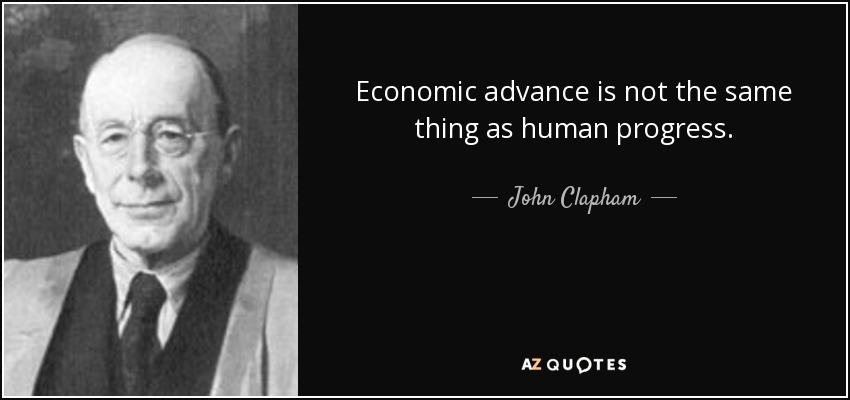
Economic advance is not the same thing as human progress.
The next decade will perhaps raise us a step above despair to a cleaner, clearer wisdom and biology cannot fail to help in this. As we become increasingly aware of the ethical problems raised by science and technology, the frontiers between the biological and social sciences are clearly of critical importance-in population density and problems of hunger, psychological stress, pollution of the air and water and exhaustion of irreplaceable resources.
I'm not sure what solutions we'll find to deal with all our environmental problems, but I'm sure of this: They will be provided by industry; they will be products of technology. Where else can they come from?
The planetary phase of history has begun, but the future shape of global society remains profoundly uncertain. Though perhaps improbable, a shift toward a planetary civilization of enriched lives, human solidarity, and environmental sustainability is still possible.
Disease may be defined as "A change produced in living things in consequence of which they are no longer in harmony with their environment."
We find that one of the most rewarding features of being scientists these days ... is the common bond which the search for truth provides to scholars of many tongues and many heritages. In the long run, that spirit will inevitably have a constructive effect on the benefits which man can derive from knowledge of himself and his environment.
You've got to be fairly solemn [about the environment]. I mean the mere notion that there are three times as many people on Earth as there were when I started making television. How can the Earth accommodate them? When people, including politicians, set their faces against looking at the consequences-it's just unbelievable that anyone could ignore it.
We cannot cheat on DNA. We cannot get round photosynthesis. We cannot say I am not going to give a damn about phytoplankton. All these tiny mechanisms provide the preconditions of our planetary life. To say we do not care is to say in the most literal sense that "we choose death."
The ecological crisis shows the urgency of a solidarity which embraces time and space... A greater sense of intergenerational solidarity is urgently needed. Future generations cannot be saddled with the cost of our use of common environmental resources.
The whole earth is a living icon of the face of God.
We want a national emissions trading scheme, the Government does not and has rejected one for years. We want to boost the mandatory renewable energies target, the Government has failed to do that. We want a national demand side management strategy for the country to reduce electricity consumption and the Government, up until now, has done very little on that score.
No conscious person can read Peter D'Adamo's works without considering much more thoughtfully how their genetic inheritance relates to their needs for specific food, lifestyle and environmental factors to improve their health.
In nature there is no such thing as waste. In nature nothing is wasted; everything is recycled.
Wind power, if not properly planned and sited, can harm birds and bats (although Danish studies of 10,000 bird kills revealed that almost all died in collisions with buildings, cars and wires; only 10 were killed by windmills). Alternative energy sources are absolutely necessary. Global warming will kill birds and bats, as well as other species, in much greater numbers than wind power.
Although they [light and medium trucks] have only 5% of the transportation market..., they account for fully 35% of greenhouse gas emissions from freight transportation.
Less than 10% of the fuel energy burned in automobiles is translated into forward motion of the vehicle and even then most of this energy is needed to move the vehicle itself, which typically weighs 20 times more than its passengers.
We humans can look deep into future and predict what will happen, but then turn around and do nothing about it.
Humans react to danger when it is immediate, immoral, visible... Global warming does not press any of those buttons.
Shipping by sea produces 1/60 the emissions of shipping by air and about 1/5 that of trucking.
Nature does not pile up 1000 hogs, then hope for the best.
The most difficult task, phase-out over the next 20-25 years of coal use that does not capture CO₂, is Herculean, yet feasible when compared with the efforts that went into World War II. The stakes, for all life on the planet, surpass those of any previous crisis. The greatest danger is continued ignorance and denial, which could make tragic consequences unavoidable.
If humanity wishes to preserve a planet similar to that on which civilisation developed and to which life on Earth is adapted, paleoclimate evidence and ongoing climate change suggest that CO₂ will need to be reduced from its current 385 ppm [parts per million] to at most 350 ppm... If the present overshoot of this target CO₂ is not brief, there is a possibility of seeding irreversible catastrophic effects.
Global warming has already triggered a sea level rise that could reach from 6 metres (19.69 ft) to 25 metres (27.34 yards).
Our analysis shows that, for the extreme hot weather of the recent past, there is virtually no explanation other than climate change. The deadly European heat wave of 2003, the fiery Russian heat wave of 2010 and catastrophic droughts in Texas and Oklahoma last year [2011] can each be attributed to climate change. The odds that natural variability created these extremes are minuscule, vanishingly small. To count on those odds would be like quitting your job and playing the lottery every morning to pay the bills.
A species may eat a particular bacterium, phytoplankton, smaller fish, or plant in an area. Lacking a predator, these species/populations will overgrow and alter the area's biology, overwhelming and driving to extinction dozens or hundreds or thousands of other local species.
Follow AzQuotes on Facebook, Twitter and Google+. Every day we present the best quotes! Improve yourself, find your inspiration, share with friends
or simply: