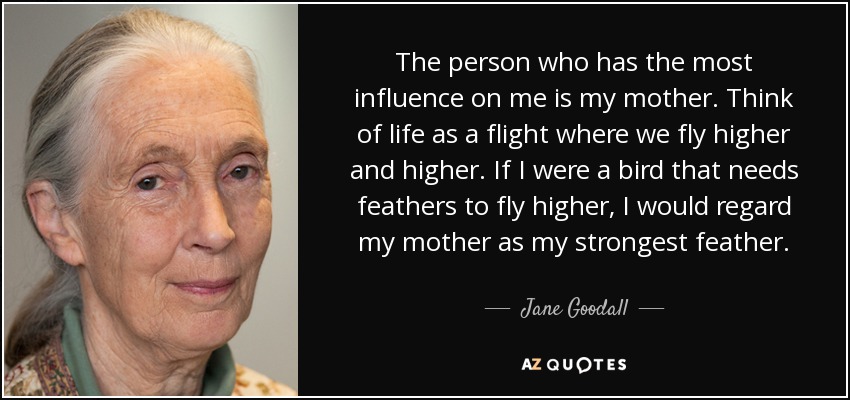
The person who has the most influence on me is my mother. Think of life as a flight where we fly higher and higher. If I were a bird that needs feathers to fly higher, I would regard my mother as my strongest feather.
If you would've asked me about getting a pilot's license before 2005, I'd say you were crazy. After I graduated college, a fighter pilot asked me if I wanted to go up on a flight in a single-engine plane. I always had a fear about being in an airplane, but I took this opportunity to go up on my first flight in a single-engine rather than a big commercial plane I was accustomed to. I was hooked and made a commitment to become a pilot. I wanted to motivate others to not let fear stand in the way of their opportunities.
With a military American base in our territory, where there could be any sort of weapons, where we have to endure every kind of provocations, we have to support and endure the flights over our territory.
Turbulence is a condition that we all experience during a flight when the plane is bouncing around by competing air currents. By analogy, the economy may bounce around a lot because of competing currents of public moods and investments. One week everyone might be optimistic and then suddenly something happens to turn everyone into pessimists. Investment dries up and investors become risk averse. A sudden piece of good news then turns around the public mood.
We packed up all the worldly possessions we could carry with us and took the next flight to Hawaii from Washington. It took just about every cent my family had to our name just to pay the plane fare. When we arrived, we had about $15 left among us. We were really in pitiful shape. But we were together, and we were alive, and this was all that mattered.
It's important to be able to simply ask the questions. Every single advance in science comes about because of courage to ask a question, an outrageous question. Like "Can a large heavy metal object fly if it goes fast enough with the right design?" People's worldviews are changed when they see that something unbelievable is possible. Airplane flight is now taken for granted. And so all wonderful advances start with an outrageous question.
All these think tank experts in Washington at the Woodrow Wilson Center say, "It's really, really a dangerous thing. It's just not right. The president of the United States should never, ever make his first foreign trip to the Middle East! Never, ever. Because it's too fraught with potential disaster. Because President Trump clearly is not sophisticated enough to know the idiosyncrasies, the customs, and the requirements." That's right, no president ever has. Do you know that there has never by a direct flight from Riyadh, Saudi Arabia, to Tel Aviv until Donald Trump did it? Never.
Black boxes are really important to our investigators. The cockpit voice recorder can give us insight into what's going on with the crew in the cockpit. The flight data recorders can give us insight into what's happening with the performance of the aircraft.
Comedy clubs are a bit more expensive. That's the problem with some of these places. But the flipside of that is, if you do too many shows for free or $5, then people don't understand why you can't fly to Milwaukee and do a show for a $3 cover. That won't even pay for my flight.
The thing that you worry about your first flight or any flight is some kind of a problem coming up that is going to keep you from doing it. Whether it's being hit by a car, or getting in a bad accident, or coming down with some other medical disqualification. But once the boosters light, you're going.
I actually had four space flights altogether, three times on shuttles. My second flight was really unique for me because I was going back into space, first of all. The first one was like an appetizer at a nice dinner. You know, you want to go up and you want more. So, the second time I got into space, it was neat because I got to actually do two space walks.
The space station mission was kind of the culmination of all of my experience of being a NASA Astronaut, so it had brought all of my previous experience into play. I had to learn the Russian language to a fluent level so that I could function as the co-pilot of the Soyuz Spacecraft that we flew up and back from the space station. And then the challenge of being the Commander of the whole expedition, a six and a-half month flight aboard the international space station. I felt the burden of the whole mission on my shoulders, which was fine, and fortunately everything did go well.
In 2006, I became the fist American to be allowed to go visit their astronaut center in China in Beijing. I think that it makes sense for the U.S. to work with China in the future and I hope to see, if the political atmosphere between the United States and China allow for us to do more cooperation together, especially in the area of human space flight. I think in the same way that it's help improve the relations between the U.S. and Russia; it would help to improve the relations between the U.S. and China.
I attended a big human space flight conference in Beijing and I was going as myself. And really, there weren't any NASA astronauts there, I was the only so-called American Astronaut there. We had astronauts from most of the other countries, certainly from Russia, from France, from Japan, several other countries, but it was a little bit odd because here we are at an international gathering of a lot of astronauts and I'm talking about somewhere upwards of 30 or so astronauts, and I'm the only American. And I wasn't even there in an official capacity.
I am from many places. I am from a hike across Tuscany...waves of golden wheat undulating on the hills...tractors plowing new vineyards...taxi drivers yelling, "Bella!" I am from a canoe motoring through marshes in the Amazon outside Manaus, Brazil... Jacana birds taking flight as we pass houses on stilts... giant trees and lily pads...and giggling children jumping into the lake for a swim during a downpour, while I stand unbelievably drenched but baptized by a oneness of spirit.
The Americans are still the leaders in human space flight. I feel we have a danger here of kind of stagnating. We're kind of resting on our laurels and there's a danger going forward if we don't take bold steps to really support human space flight in this country that we could fall behind. After the space shuttle is retired, we're going to have a big gap, five to seven years, at least where we're not going to have the ability to send our own astronauts into space, we'll have to buy rides on the Russian Soyuz, and so that will be a pretty big step down for us.
The current market cost for a space flight, about a week in space and about six people have gone with the Russians so far to the International Space Station; it costs about $30 to $35 million. So, it's not for the faint of heart. But our own market studies that we've commissioned as well as some public market studies all indicate that there are somewhere around 20 or so individuals every year who have both the means and the interest to do this. So, the market is definitely out there.
Richard Branson is probably the most visible of the private commercial space guys, and what is venture, Virgin Galactic is about is sub orbital flight. That is, you'll see a spacecraft that looks more or less like an airplane and it will fly into space, but only spend about 15 minutes. It'll go up in a parabolic arc and then fall back down, and so the customers on that flight will only get about five minutes of weightlessness. They'll get to glimpse the horizon of the Earth, take a look at it before just before they start coming back down into the atmosphere.
The United States, Russia, and China are the only three countries in the world that can launch astronauts into space. Mostly in the U.S. you see some companies trying to launch private commercial people into space, but nobody's done it yet. The only private vehicle that's made it into space so far is Spaceship 1 in 2004, and that was an effort that was funded by one of the Microsoft founders, and he spent about $20 million to develop this spacecraft to do a sub-orbital flight. And it's not the same as going into orbit, but it was a huge first step.
There is a danger in our modern practice of using embedded journalism. As there is less and less money available for journalism to uphold its independence, there is a temptation for people to take short cuts. If this army or that army or this corporation is willing to pay for your flight or your accommodation, then it's much more difficult to tell what the real story might be. I do have a concern about that.
When well-qualified, upper middle-class blacks or Latinos or Asians move to predominantly white neighborhoods, there's what's called the tipping point. That tipping point is generally 15 percent; at 15 percent you begin to see white flight.
I'm sure there are managers who have had far greater financial success. But my companies such as easyJet have changed the lives of many people. We haven't just made flights affordable for a lot of people.
Our resources will diminish in the coming decades at a time when hunger for energy grows dramatically in China and other parts of Asia. Eventually, it will just be impossible to fly - normal flights will become as expensive as flying with the Concorde.
I've always wanted to travel. My mom was a geography queen, I knew the atlas, and I looked at her pictures of all her world travels because she traveled a lot before I was born, with my brother. I was always so jealous. I kind of chose a job that would be a way I could see the world without having to pay for it. I'm not going to be a flight attendant. I'm way too busy to be that.
Even if you're not enjoying the flight, it's futile to threaten to get out and walk.
Follow AzQuotes on Facebook, Twitter and Google+. Every day we present the best quotes! Improve yourself, find your inspiration, share with friends
or simply: