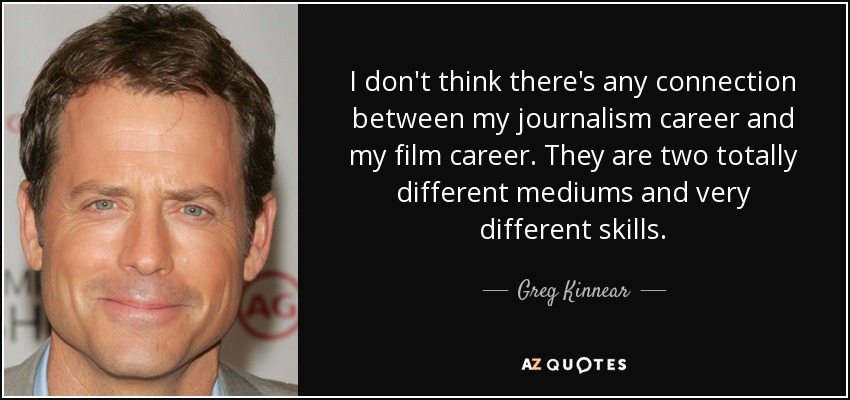
I don't think there's any connection between my journalism career and my film career. They are two totally different mediums and very different skills.
The difference between fiction and journalism is that you can disguise the characters, so you won't get your legs broken, and there's no interview tapes to transcribe.
I think the worst thing we can do is to concede to fanaticism its devotion, say. Well, you have to understand, these people are really fanatics, so we should back down from them. I think if journalists start doing that then they won't be practicing journalism. If satirists start doing that then they won't be practicing satire.
Poetry allows me to write about what I don't know, whereas journalism demands a higher level of certainty to be worthy of being written.
Which is one of the dangers of immersion journalism: you can find yourself getting sucked into battles you have nothing to do with, in this case an ongoing battle between Muslims.
That being said, even if we cannot achieve it, journalism that strives toward objectivity and fairness has an important place in our society. So, too, does being honest and open when presenting our own opinions, as you do so well in your book
As the newspaper industry continues to contract, one of the most commonly voiced fears is that serious investigative journalism will be among the victims of the scaleback. And, indeed, many newspapers are drastically reducing their investigative teams.
Of course, no matter how hard we try to be objective as reporters, our life experiences and personal circumstances influence our journalism, including the choice of topics we pursue.
The Congressional leaders set the agenda for journalism; it's not the other way around.
We don't consider ourselves equal opportunity anythings, because that's not - you know, that's the beauty of fake journalism. We don't have to - we travel in fake ethics.
I think the style Plimpton popularized - the dive-in, try-it-yourself journalism - is appealing and useful for a number of reasons, not the least of which is the value of an outsider's view into a little-known or misunderstood subculture. I tried to do the same thing with my book - tap into a pocket of American life that few people have any idea about, and tell the real, unvarnished truth about it in a way that was open-minded and authentic.
The junk food of political journalism...all reshuffle stories are crap.
I've never written a hard journalism piece in my life. I've never wanted to do that.
I grew up in newsrooms. I've been in newsrooms since I was 17 years old. Journalism has been like my church; it's been like my identity.
You can't be wrong in journalism. Take a wrong turn in journalism, and you are writing fiction. You can take a wrong turn in poetry, and something wonderful can happen.
The fun thing about journalism is if you go do a story about something, you can now ask three intelligent questions about it. Or say three intelligent things. And that gets people talking.
As journalism dies, I kind of feel like I want some skills besides writing. I'd like to be able to write movies or host TV shows or whatever. Things that I might actually not inherently like quite as much, but are interesting and fun things to do. A good backup plan.
Journalism makes you think fast. You have to speak to people in all walks of life. Especially local journalism.
I hated the culture [working in the bank], I hated the work. I very quickly realized that this wasn't what I wanted to do. So, after two years, I took some writing courses - I always loved to write - and I figured the only way I was going to get paid to write was in journalism.
I really wasn't very involved politically with anything up until that point. Then I started reading about the second Palestinian Intifada, and I spoke to friends in activist and journalism circles. Then, somehow by complete luck, I ended up at Democracy Now.
Journalism is a great profession. It's complicated now. People talk about the demise of investigative reporting. I was a judge in some award contest recently, and the stuff that is being done by major newspapers, and local, regional papers around the country, is great. Newspapers play an amazing role in our society, and I still think they are important. I'm sorry newspaper circulation is down. Ultimately, the importance of newspapers can't be replaced.
It's important to remember that the future of quality journalism is not dependent on the future of newspapers. The discussion needs to move from "How do we save newspapers?" to "How do we save and strengthen journalism?" - however it is delivered.
Sports has become such a big business that the line between journalism and being a broadcast partner for all intents and purposes has been obliterated.
I think the deepest thing is that many fiction writers tell stories but are not elegant writers. But, we're not writing journalism when we're making literature.
Also, and this may sound naïve, but since my early days in journalism, I've felt that getting as close as possible to truth, revealing the reality of a situation in detail, has its own persuasive power. This allows readers to look at the facts and the perspectives presented and draw informed conclusions.
Follow AzQuotes on Facebook, Twitter and Google+. Every day we present the best quotes! Improve yourself, find your inspiration, share with friends
or simply: