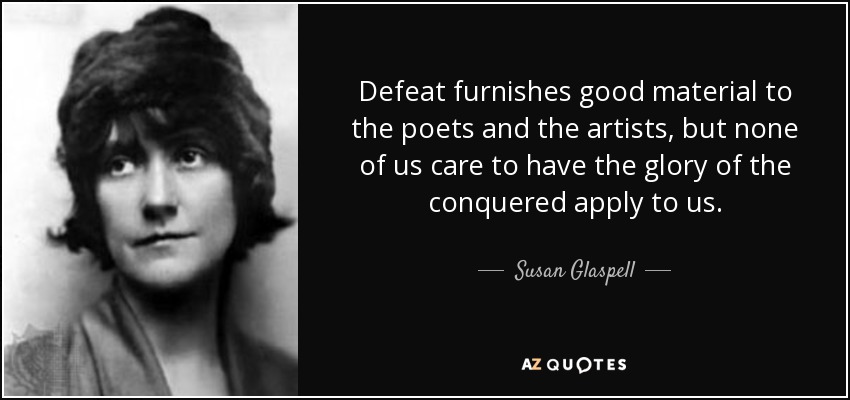
Defeat furnishes good material to the poets and the artists, but none of us care to have the glory of the conquered apply to us.
Katherine Sedley was the only daughter and heiress to the libertine poet Sir Charles Sedley, and grew into a thoroughly scandalous lady in her own right.
But Thee, but Thee, O sovereign Seer of time, But Thee, O poets' Poet, Wisdom's Tongue, But Thee, O man's best Man, O love's best Love, O perfect life in perfect labor writ, O all men's Comrade, Servant, King, or Priest, -- What IF or YET, what mole, what flaw, what lapse, What least defect or shadow of defect, What rumor, tattled by an enemy, Of inference loose, what lack of grace Even in torture's grasp, or sleep's, or death's -- Oh, what amiss may I forgive in Thee, Jesus, good Paragon, Thou Crystal Christ?
The first thing that strikes you about Timothy Murphys verse is the palpable texture of his line - that sound of sense practised by that other American poet-farmer, Robert Frost. And just as Murphys ear is trained on the rhythms of local speech and classical epigram, his eye holds fast on the image. This is an undeluded vision, sometimes bleak, often funny, and never less than painstakingly crafted.
One of the great unresolved psychological enigmas of the modern western world is the question of what or who has persuaded us to accept as virtually axiomatic a self-view and a world-view that demand we reject out of hand the wisdom and vision of our major philosophers and poets in order to imprison our thought and our very selves in the materialist, mechanical and dogmatic torture-chamber devised by purely quantitative and third-rate scientific minds.
Poetry's unnat'ral; no man ever talked poetry 'cept a beadle on boxin' day, or Warren's blackin' or Rowland's oil, or some o' them low fellows; never you let yourself down to talk poetry, my boy.
The job of the poet (a job which can't be learned) consists of placing those objects of the visible world which have become invisible due to the glue of habit, in an unusual position which strikes the soul and gives them a tragic force.
So we start with an oversignifying reader. Those texts that appear to reward this reader for this additional investment - text that we find exceptionally suggestive, apposite, or musical - are usually adjudged to be 'poetic'. ... The work of the poet is to contribute a text that will firstly invite such a reading; and secondly reward such a reading.
When oxygen and sulphur dioxide are mixed in the presence of a filiament of platinum, they form sulphurous acid. This combination takes place only if the platinum is present; nevertheless the newly formed acid contains no trace of platinum, and the platinum itself is apparently unaffected: has remained inert, neutral, and unchanged. The mind of the poet is the shred of platinum.
As far as I can tell, there are two kinds of poets: those who want to tell stories and sing songs, and those who want to work out the chemical equation for language and pass on their experiments as poetry.
I've learned that my readings of others' work often has little connection to their intentions. This doesn't mean that my response is wrong, and it doesn't make the author's views less right. Poets, like their poems, are "hopeful monsters".
Powell belongs, in fact to the first generation of American poets who may have grown up without even a vestigial connection to the accentual-syllabic, rhyming English tradition - his inventive lines have this absence at their back.
Some poets marry a language; some have affairs with it; some treat it as a parent, some as a child, some as an equal, or as a friend.
This capacity for oversignifying, for reading in, is precisely what poets tap into, both in their own practice and in the poem the give to the reader; and in doing so they turn language against its own project of conceptual division, and use it to heal itself - and in the process - paradoxically - to articulate new concepts that it can't yet accommodate.
The poet's discourse can be compared to the track of a charged particle through a cloud-chamber. An energised field of association and connotation, of overtones and undertones, of rebus and homophone, surround its motion, and break from it in the context of collision .. in Western poetry so much of the charged substance is previous poetry.
One of the great criticisms of poets of the past is that they said one thing and did another.
Seeking the Cave is part travelogue, part literary history, and part spiritual journey. James Lenfestey is a lively and entertaining tour guide. Modest, funny, curious, and wide open to the world, he gives us perceptive glimpses of Chinese culture, ancient to contemporary, and into what it means to be a poet, both now and twelve centuries ago. The account of his quest to find Han Shan's cave is a delight from beginning to end.
It is possible that Mount Olympus may have supplied the poets with the hint for saying that Jupiter obtained the kingdom of heaven, because Olympus is the common name both of the mountain and of heaven.
The poet presents the imagination with images from life and human characters and situations, sets them all in motion and leaves itto the beholder to let these images take his thoughts as far as his mental powers will permit. This is why he is able to engage men of the most differing capabilities, indeed fools and sages together. The philosopher, on the other hand, presents not life itself but the finished thoughts which he has abstracted from it and then demands that the reader should think precisely as, and precisely as far as, he himself thinks. That is why his public is so small.
Don't feel guilty if you don't immediately love your stepchildren as you do your own, or as much as you think you should. Everyoneneeds time to adjust to the new family, adults included. There is no such thing as an "instant parent." Actually, no concrete object lies outside of the poetic sphere as long as the poet knows how to use the object properly.
After all, poets shouldn't be their own interpreters and shouldn't carefully dissect their poems into everyday prose; that would mean the end of being poets. Poets send their creations into the world, it is up to the reader, the aesthetician, and the critic to determine what they wanted to say with their creations.
Give shape, artist! don't talk! Your poem be but a breath.
The question "From where does the poet get it?" addresses only the what, nobody learns anything about the how when asking that question.
And truly Philosophy is but sophisticated poetry. Whence do those ancient writers derive all their authority but from the poets?
Poetry reproduces an indefinable mood that is more amorous than love itself. Venus is not so beautiful all naked, alive, and panting, as she is here in Virgil.
Follow AzQuotes on Facebook, Twitter and Google+. Every day we present the best quotes! Improve yourself, find your inspiration, share with friends
or simply: