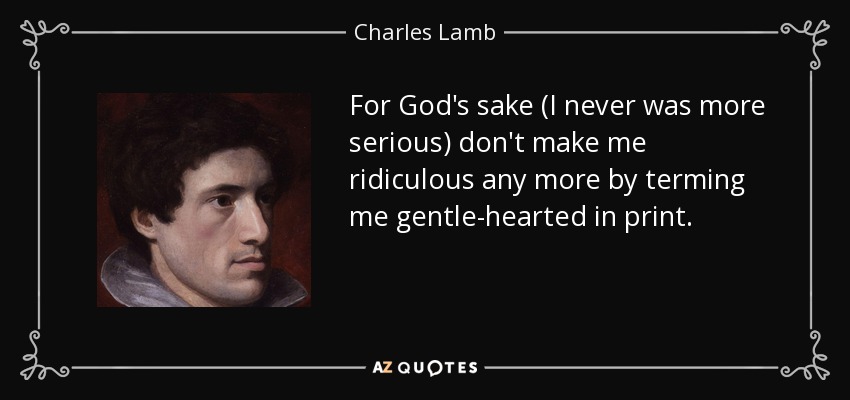
For God's sake (I never was more serious) don't make me ridiculous any more by terming me gentle-hearted in print.
Unlike the photography and prints, I never catalogued, kept track of or exhibited the sketches. I sold some occasionally, but never saw myself as a graphic artist. They became more important to me thanks to the exhibition, however, and I realized that these drawings were quite interesting after all.
I am personally acquainted with hundreds of journalists, and the opinion of the majority of them would not be worth tuppence in private, but when they speak in print it is the newspaper that is talking (the pygmy scribe is not visible) and then their utterances shake the community like the thunders of prophecy.
Reporters no longer ask for verification, thus they print charges no matter how outlandish they may seem, and once having done that, when the truth comes out, it's buried in the back page or never makes it on the air at all.
One, I have a wonderful publisher, Black Sparrow Press; as long as they exist, they will keep me in print. And they claim they sell very respectable numbers of my books, so I guess, and it's true, every place I go, my books are in libraries and on bookshelves.
We Brits print banknotes out in Debden in Essex, and have contracted it out to the private sector. Here in the U.S. it is a government operation right in the heart of Washington next door to the Holocaust Museum.
Sometimes when I read about my rebellion in print it sounds a little overrated.
To me, the print business model is so simple, where readers pay a dollar for all the content within, and that supports the enterprise.
I think there's a future where the Web and print coexist and they each do things uniquely and complement each other, and we have what could be the ultimate and best-yet array of journalistic venues.
I love vintage and prints.
As a print journalist, if you hear a rumour you try to stand it up and if you can't, the story dies. With a blog you can throw the rumour out there and ask for help. You can say: 'We don't know if this is true or not.
Read as much as you can. Write only when you feel the inner need to do so. And don’t ever rush into print.
Prints mimic what we are as humans: we are all the same and yet every one is different. I think there's a spiritual power in repetition, a devotional quality, like saying rosaries.
The best use of a journal is to print the largest practical amount of important truth: truth which tends to make mankind wiser, and thus happier.
But once you publish a book, doesn’t it by definition become the realm of public discourse? Otherwise, wouldn’t we just write books and print them out ourselves, and give them to specific people we felt comfortable giving them to–like gifts? Isn’t publishing sort of a social contract?
When you pay social security taxes, you are in no way making provision for your own retirement. You are paying the pensions of those who are already retired. Once you understand this, you see that whether you will get the benefits you are counting on when you retire depends on whether Congress will levy enough taxes, borrow enough, or print enough money.
In spite of the roaring of the young lions at the Union, and the screaming of the rabbits in the home of the vivisect, in spite of Keble College, and the tramways, and the sporting prints, Oxford still remains the most beautiful thing in England, and nowhere else are life and art so exquisitely blended, so perfectly made one.
The Christian's life should put his minister's sermon in print.
I just love the whole idea of conversational prints.
Different levels of photography require different levels of understanding and skill. A "press the button, let George do the rest" photographer needs little or no technical knowledge of photography. A zone system photographer takes more responsibility. He visualizes before he presses the button, and afterwards calibrates for predictable print values.
My pictures are never pre-visualized or planned. I feel strongly that pictures must come from contact with things at the time and place of taking. At such times, I rely on intuitive, perceptual responses to guide me, using reason only after the final print is made to accept or reject the results of my work.
At last, after almost fifty years in the hopper, the most famous unpublished novel in America is in print. Who Shot the Water Buffalo? is a splendid story of comradeship in a time and place of constant peril, but it's Babbs's irrepressible exuberance and vast, affectionate good humor that make the story go. I love this novel.
You want to tell a story? Grow a heart. Grow two. Now, with the second heart, smash the first one into bits. Gross, right? A bloody pulpy liquid mess. Look at it, try to make sense of it. Realize you can't. Because there is no sense. Ask your computer to print out a list of every lie you have ever told. Ask yourself how much of the universe you have ever really seen. Look in the mirror. Are you sure you're you? Are you sure you didn't slip out of yourself in the middle of the night, and someone else slipped into you, without you or you or any of you even noticing?
Protestant churches everywhere are gravitating toward union with the Roman Catholic Church. These religious movements are speeding the fulfillment of the prophecies of the resurrected Roman Empire. For 30 years I have been proclaiming this tremendous event over the air and in print.
I was trying to write an autobiography using prints and patterns that reference emotional, psychological, and personal development in my work, as a person growing up, figuring out who I was. I used fabrics to stand in for occurrences.
Follow AzQuotes on Facebook, Twitter and Google+. Every day we present the best quotes! Improve yourself, find your inspiration, share with friends
or simply: