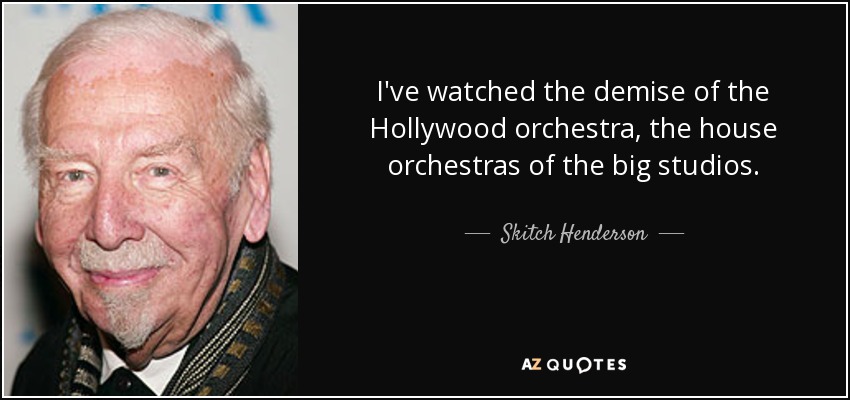
I've watched the demise of the Hollywood orchestra, the house orchestras of the big studios.
My family is full of musicians, and a couple of times a year we get together and jam at my cousin's studio. We improvise and have a great time.
Along the way [Mozart] got married; fathered seven children (two of whom survived into adulthood); performed as a pianist; violinist; and conductor; maintained a successful teaching studio; wrote thousands of letters; traveled widely; attended the theater religiously; played cards, billiards, and bocce; and rode horseback for exercise. Not bad for someone portrayed as a giggling idiot in the movies.
So for my studio purposes, I know that I'm in my studio with technicians who've done amazing things to my board and to my power amps and I know what I can deliver out of my studio.
I've had the luxury of owning my own studio, 24 analogue, 48 digital, endless effects, endless hardcore gear, that I don't have to rent, I don't get stuck with the bills, it's all mine.
Big studio comedies are such a headache.
For the most part, studio movies have huge budgets. They don't do anything under 30 to 40 million. When you have that much money at stake, you have so many people breathing down your neck.
In the studios days, the public's perception of movie stars was much different, because the stars were so much less exposed. This made them seem more special, more unearthly. Today they're no longer perceived as different - they've become human, so to speak.
Set in the remote and harsh high desert landscape of Idaho, Outpost is an artist live/work studio and sculpture garden for making and displaying art. An important aspect of the complex is the protected paradise garden, which is separated from the wild landscape by thick masonry walls. The materials used in the structure, including concrete block, car-decking, and plywood, require little to no maintenance, and are capable of withstanding the extreme weather that characterize the desert’s four seasons.
I remember wearing overcoats, hiding in the bushes outside of Abbey Road Studios, waiting for the traffic to clear. As it did, we would drop our overcoats and run out on to the cross walk and strike our poses.
Music itself is a great source of relaxation. Parts of it anyway. Working in the studio, that's not relaxing, but playing an instrument that I don't know how to play is unbelievably relaxing, because I don't have any pressure on me.
Motion-picture studio floors used to be all wooden and not smooth at all. This was difficult when moving a camera around on a dolly.
Which is why I felt I was truly blessed this year, with leads in two nice films, and also the luxury of being able to do a studio film and an independent afterwards was fantastic.
For me now, it's about what you would write and what you wouldn't write, and that's how I select what I am going to do. It can be quite nice being brought a concept by a studio for me to work on.
There's a million new people in the studio every day creating new stuff so I really had to be on my toes with this one so I could get it out before somebody else could.
Decline III, I funded myself, from the studio money. That, and I sold a lot of drugs. Kidding. Don't print that.
The thing with me. I can't stick musicians. I've thought about this. I can't stand them, and being stuck in a studio with them I think that's my strength I can hear what they can't.
When I go into the studio, I completely detach. I let my emotions come out.
After the war, there was no industry. We lost the war. We had our whole city destroyed. No money. No studio. No film. No camera. No equipment. We would shoot in the street. We had no actors. Nothing. But we wanted to do movies. And we did the best movies in the world.
I was about 11 when my mother brought me this karaoke machine and I was really into it back then, but about 4 or 5 years ago is when I started printing up my own music, going to the studio and doing my own thing.
Perhaps the more "operatic" video pieces were a reaction to my knit sculpture, which kept me isolated for so long in the studio that the videos were a way for me to be social and flamboyant and to change my mind all the time. Because when I did the knit pieces, once I committed myself to a piece, I was locked into an idea, and the only thing that could really move was my mind. The early video pieces were a way for me to express what was going on in my mind.
Nowadays, if a studio assumes that his film is bad, there is always an executive that gets more nervous than usual and thinks that if they change the music, the film will become a masterpiece.
And usually the studios they don't want you to have credit for your movies because they want to take credit for the movies because if you get credit for your movies they've got to pay you more.
I think taking design out of the studio and really having a relationship with the people that you're making it for really convinced me of how powerful a thing design is. It's not just an aesthetic decoration.
A German officer visited Picasso in his Paris studio during the Second World War. There he saw Guernica and, shocked at the modernist «chaos» of the painting, asked Picasso: «Did you do this?» Picasso calmly replied: «No, you did this!»
Follow AzQuotes on Facebook, Twitter and Google+. Every day we present the best quotes! Improve yourself, find your inspiration, share with friends
or simply: