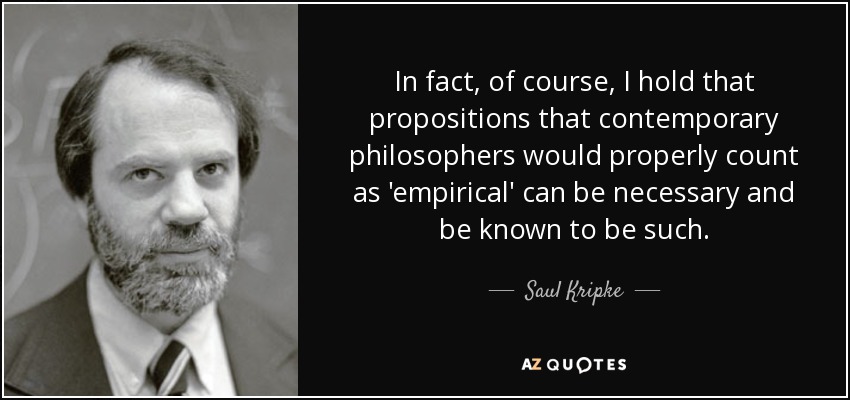
In fact, of course, I hold that propositions that contemporary philosophers would properly count as 'empirical' can be necessary and be known to be such.
Defining and celebrating the New Father are by far the most popular ideas in our contemporary discourse on fatherhood. Father as close and nurturing, not distant and authoritarian. Fatherhood as more than bread winning. Fatherhood as new-and-improved masculinity. Fathers unafraid of feelings. Fathers without sexism. Fatherhood as fifty-fifty parenthood, undistorted by arbitrary gender divisions or stifling social roles.
The visible universe is subject to quantification, and is so by necessity. … Between you and me only reason will be the judge … since you proceed according to the rational method, so shall I. … I will also give reason and take it. … This generation has an innate vice. It can’t accept anything that has been discovered by a contemporary!
Even here in California with more contemporary buildings. I have a real problem with the low doorframes. It's a curse! That's just another of the many problems I have to live with.
History is so fleeting and we are so busy consuming media and the contemporary culture, voraciously gobbling it up, that we have no room to look back ever, and our young people have a tough time looking back.
Aurelie Sheehan's absorbing stories have depth miles beneath their compelling surface. They radiate a wisdom, beauty and originality rare in contemporary fiction.
[On The Waste Land:] Various critics have done me the honor to interpret the poem in terms of criticism of the contemporary world, have considered it, indeed, as an important bit of social criticism. To me it was only the relief of a personal and wholly insignificant grouse against life; it is just a piece of rhythmical grumbling.
Contemporary politics is all about phony energy, about running around slamming doors for the sake of it-or, more to the point, opening them and tossing through a huge sack of taxpayer dollars.
Dunbar-Ortiz strips us of our forged innocence, shocks us into new awareness, and draws a straight line from the sins of our fathers-settler-colonialism, the doctrine of discovery, the myth of manifest destiny, white supremacy, theft and systematic killing-to the contemporary condition of permanent war, invasion and occupation, mass incarceration, and the constant use and threat of state violence.
We need to remind ourselves that contemporary art is first of all a form of conceptual gymnastics, in which we learn to coexist with what we don't understand.
Men are so charmed with valor that they have pleased themselves with being called lions, leopards, eagles and dragons, from the animals contemporary with us in the geologic formations.
There is nothing “still” in the remarkably visceral poems of Alexander Long's third collection, Still Life, and nothing is at rest in these restless and edgy poems. Conversational and kinetic, these poems chart the traces left by the shifting overlays of the templates of literature, rock-and-roll, and contemporary culture. As each poem in Still Life attempts to fix a focus upon a scene or subject, the protean natures under view draw the poet into the eddies and complexities of reflection. This is a powerful and moving collection of poems.
Underground electronic music is art - fundamentally it's based on contemporary art, culture, dance, and real music. If you look at EDM, how many of those cultural standpoints are the same?
This world has many rings, like Saturn, and we live now on the outmost of them all. None can say deliberately that he inhabits thesame sphere, or is contemporary, with the flower which his hands have plucked, and though his feet may seem to crush it, inconceivable spaces and ages separate them, and perchance there is no danger that he will hurt it.
Here is one of the fundamental defects of American fiction--perhaps the one character that sets it off sharply from all other known kinds of contemporary fiction. It habitually exhibits, not a man of delicate organization in revolt against the inexplicable tragedy of existence, but a man of low sensibilities and elemental desires yielding himself gladly to his environment, and so achieving what, under a third-rate civilization, passes for success. To get on: this is the aim. To weigh and reflect, to doubt and rebel: this is the thing to be avoided.
Literature that is not the breath of contemporary society, that dares not transmit the pains and fears of that society . . . loses the confidence of its own people, and its published works are used as wastepaper instead of being read.
When you look on one of your contemporary 'good copies' of historical remains, ask yourself the question: Not what style, but in what civilization is this building? And the absurdity, vulgarity, anachronism and solecism of the modern structure will be revealed to you in a most startling fashion.
In contemporary society [the typical lady] is an archaism, and can't hardly understand herself unless she knows her own history.
It is possible to see slavery and serfdom merely as extreme early forms of autocratic management, in which employees had no voice whatsoever in the work process and were viewed not as human beings but as alienated forms of individual wealth. Slavery, in this sense, did not die; it continues in modern dress in contemporary organizations wherever managers exercise autocratic power, unequal status, or arbitrary privileges, no matter how scientific the terminology or postmodern the image
The pace of consumption, waste and environmental change has so stretched the planet's capacity that our contemporary lifestyle, unsustainable as it is, can only precipitate catastrophes, such as those which even now periodically occur in different areas of the world ... we need to reflect on our accountability before those who will have to endure the dire consequences.
The basic question 'will I obey Christ 's teaching?' is rarely taken as a serious issue. For example, to take one of Jesus' commands, that is relevant to contemporary life, I don't know of any church that actually teaches a church how to bless people who curse them, yet this is a clear command.
We do not have any respect, let alone reverence, for the world of nature because we do not have any respect, let alone reverence, for ourselves. It is because we cripple and mutilate ourselves that we cripple and mutilate everything else as well. Our contemporary crisis is really our own depravity writ large.
I grew up in New Mexico, and the older I get, I have less need for contemporary culture and big cities and all the stuff we are bombarded with. I am happier at my ranch in the middle of nowhere watching a bug carry leaves across the grass, listening to silence, riding my horse, and being in open space.
I suppose in a way most of my characters are non-consumers, not terribly interested in all the little baubles and artifacts of contemporary life.
I'm not at all contemporary, not even modern, and the fact that I would be so quaintly attracted to that wrestling rule makes me, I suppose, seem all the more old-fashioned. I believe in rules of behavior, and I'm quite interested in stories about the consequences of breaking those rules.
Follow AzQuotes on Facebook, Twitter and Google+. Every day we present the best quotes! Improve yourself, find your inspiration, share with friends
or simply: