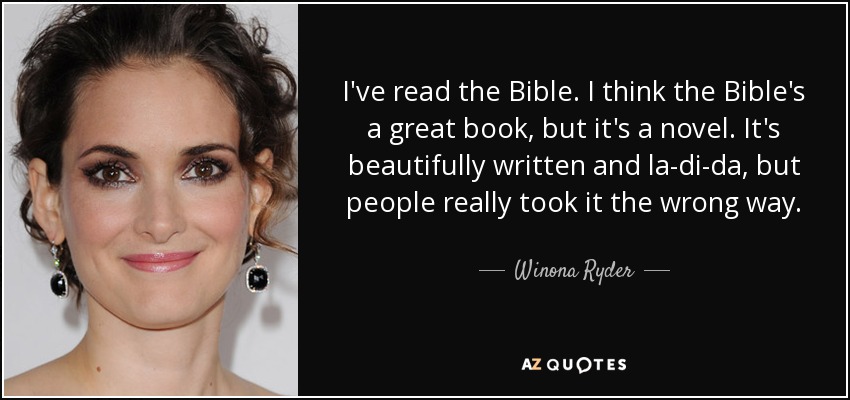
I've read the Bible. I think the Bible's a great book, but it's a novel. It's beautifully written and la-di-da, but people really took it the wrong way.
Novels definitely come more naturally to me. When I write short stories, it's always a fight against it expanding.
The most obvious difference between writing novels and memoirs is that my memoirs are true stories, and explore certain experiences I've lived, and thus operate within the boundaries of memory and fact.
I believe a good memoir should have all of the narrative elements of a novel: character development, dialogue, descriptive language, and metaphor.
Novels function and the power of novels function because of their stories.
I have never read a really good novel written by a man where women are portrayed as they truly are. They can be portrayed externally very well - Stendhal's Madame de Renal, for example - but only as seen from the outside.
Shamefulness is always a huge part of my characterizations. I like protagonists that reveal, either through "honesty" in their various thought processes or via their actions, perhaps telling us things they're not so keen on disclosing through their interactions with the outside world. Probably both during the duration of a novel.
Writing a novel is like an amusement park or a museum or a city. You go into that place and you have certain experiences and those experiences, hopefully, have some impact on you.
I find that in a novel I can get more of life, perhaps not such intense life, but certainly more of life than in poetry.
Novels are such mysterious and amorphous and tender things. And here we are with our crash helmets on, with concertina wire all around us.
I can see myself wanting to write a historical novel - you don't need to worry about references to reality TV or pop music, you can just get on with the basics of story and character.
In an episodic treatment, such as a teleplay is, you have the ability to do what you can do in a novel, which is flash back and flash forward in the same instant, in the same scene, in the same voice.
Somebody said, 'Hey, there is a lull in your career. Why don't you write books about your [dyslexia]?' We are currently writing our 34th novel.
Comics are stories; they're like novels or anything else. So the first thing you have to do is become a good storyteller.
In terms of style, I think the memoirist should have a novelist's skill and all the elements of a novelist's toolbox. When I read a memoir, I want to really, deeply experience what the author experienced. I want to see the characters and hear the way they speak and understand how they think. And so in that way, writing a memoir feels similar to writing a novel.
I do like the idea of the novel of repressed college students being a contemporary novel of courtship! I guess what I would say to that is, we tend to think of historical periods and historical mores as ending a lot more concretely than they do. Like, in an Austen novel, there are lots of reasons - cultural, moral, religious - why the characters don't have sex during courtship. Maybe, even though those reasons have kind of expired, historically, they're still around in some sense.
The question I hate the most is "How did you DO it - write novels and raise your children simultaneously!" I mean, do MALE authors get asked that??
The concept of writing a novel and not knowing where it's going - I don't know how to do that. Novels are plot- and character-driven, so if I don't know what becomes of people, how can I know where it should begin?
For most of my life, when I've finished the book I'm writing, there've always been as many as two or three other novels waiting to be written next. And the decision driving which one of them it should be was never based on how long it had waited or how many accumulated pages of notes I had.
I would say that, in the future, the book will be reserved for things that function best as a book. So, if I need a textbook that's going to be out of date because of new technological inventions, you're better off having it where you can download the supplements or the update. If you're going to read a quick mystery novel to keep you amused while you're traveling, it's fine.
I can write any kind of novel I want, any time, and sell it, but there's not that many people watching it. Even a low-rated TV show is a couple million more people than read my books. You want to be read, in essence. If you're a television writer, you're a writer and you want people to read your stuff. You're still reaching a bigger audience, that way. That's a philosophical way to look at it.
Once you get past the grand normative claims made in the West for literature, especially the novel, in the post-Christian era - that it is a secular substitute for religion, hallmark of modern civilization, a priori liberal and cosmopolitan, with authors appearing to implicitly embody such pious ideals - you encounter a less agreeable reality: parochialism, blinkered views, even racial prejudices of the kind the bourgeoisie have held everywhere.
When I am writing novels I don't read a lot of novels so I try to catch up in-between.
The only position when violence is threatened in response to a novel or a cartoon or a crappy YouTube video is a no-surrender position. This is how we live. We live in a country in which we have these rights, and we're not going to give them up. Full stop. The end.
A novel must work as a story because no one's going to get to the other themes if you don't entertain the reader. But I like to have another layer of meaning, although you can read the book on one level and not bother with that other layer.
Follow AzQuotes on Facebook, Twitter and Google+. Every day we present the best quotes! Improve yourself, find your inspiration, share with friends
or simply: