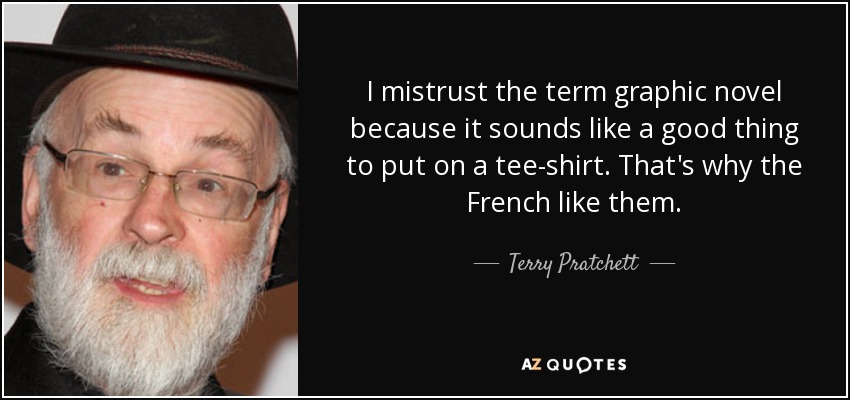
I mistrust the term graphic novel because it sounds like a good thing to put on a tee-shirt. That's why the French like them.
I have a suspicion - I have to be careful what I say - that you might actually find the best comics actually written by people who are comics writers and who aren't setting out to do graphic novels.
If you get trapped in your head and out of your body during the writing process, it's very easy to make wrong turns. You have to really be in touch with your heart rather than your head to write the novel you want.
We have to diversify, we have to find work we can do that helps other people while helping ourselves, work that has to do with writing that isn't necessarily just writing saleable novels or getting huge advances.
I had read [Charles] Dickens's novels were often published serially. I thought it would be fun to write a book, just sitting down and writing a chapter every day, not knowing what would happen next. So that's how I wrote the first draft. And then of course I had to go back and make sure everything worked and change things.
It really does feel, partly because of graphic novels kids read, like there's a lot of freedom with how you can use both images and words, because we think in both of those ways.
I hate it when people tell me the end of the story because my mother always read the last page of a novel first to see whether she wanted to read it. It was a strange reading habit.
My Italian-American heritage, of which I'm very proud and with which I identify strongly, surfaces in several of my novels.
My father thought a novel was a broken short story. There's something to that. Many of my favorite novels are novellas. The authors of brief things must reckon with the precision of language.
I knew from previous books not to count on anything in terms of sales. My first novel - -The Raven's Bride, about Sam Houston's disastrous first marriage - -sold well and got attention, but my second book - -Promised Lands, about the Texas Revolution - -didn't.
I read novels for entertainment rather than for edification, so I tend not to read the sort of novels that are said to illuminate the human condition.
I'm easily persuaded that a really good novelist who gets inside somebody else's head could be serving a valuable purpose. I enjoy satirical novels that take a wry, humorous, ironic look at modern life.
Without explaining why, and, most of all, without naming other authors or books, I can only say my novels are influenced by love and death.
I hate the word juicy in describing anything: lips, plots, oranges. But especially novels. It feels - icky. Reminds me of saliva.
My intention was never to write a "trans novel" - which is perhaps an effective strategy for writing a trans novel.
I don't yet know what style will be required for my next novel, but my sense is that each book will involve a new relationship to language.
A creative person can suddenly realize it's not 90 minutes. They haven't got to do three acts, they haven't got to do the arc, but they can do other things. I think just as novellas turned into novels, I think that television series can begin to have that depth.
I'm not suggesting that ours [series] is unique in that, but they can begin to have that depth, that gravity, they can spend some time, so it's a bit more like reading a good novel, if you like.
Novels may have taken care of the emotional business for me, which has allowed music to be more emotional for me.
The truth is that when you're writing a novel you're really living in it; you're living in the house, and you're living in the town.
The condition of visibility as it relates to black people was crucial. Connected to that, I've always been interested in science fiction and horror films and was acutely aware of the political and social implications of Ralph Ellison's description of invisibility as it relates to black people, as opposed to the kind of retinal invisibility that H.G. Wells described in his novel Invisible Man.
I'm reading "Team of Rivals'' I'll probably ending up reading a bunch of books about the Civil War. But I think my all-time favorite book about the war is the novel, "The Killer Angels'' by Michael Shaara.
I first told the idea to an editor I had met who, after reading one of my novels for adults that was set in a high school, had an idea that I might write something for children.
When I was researching my very first novel, "The Basic Eight," I was calling right-wing political and religious organizations and asking them to mail me their material so that I could mock them in my novels.
Decline and Fall was a very depressing Evelyn Waugh novel, I think it was his first. I didn't get it at all, and then I got to love Waugh. And I think that maybe "Cosmopolitans" has a bit of an Evelyn Waugh vibe to it at some point.
Follow AzQuotes on Facebook, Twitter and Google+. Every day we present the best quotes! Improve yourself, find your inspiration, share with friends
or simply: