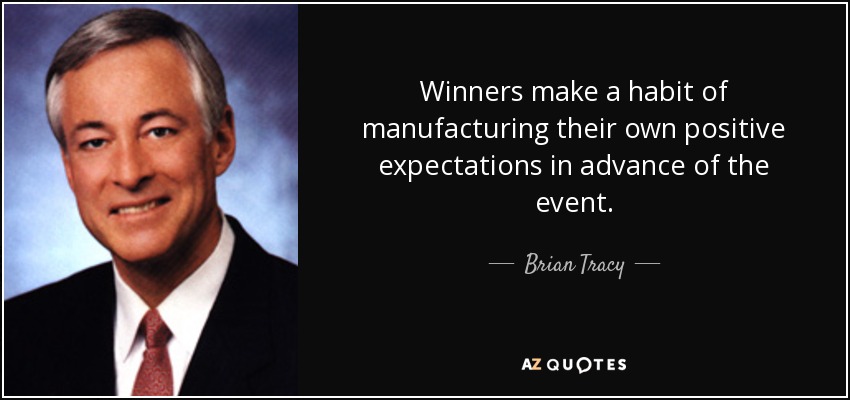
Winners make a habit of manufacturing their own positive expectations in advance of the event.
There would be no bohemia without smoking.
Pursuits become habits. [Lat., Abeunt studia in mores.]
predicament, n. The wage of consistency.
Habit is the ballast that chains the dog to his vomit.
A tendency to resume the same mode of action at stated times is peculiarly the characteristic of the nervous system; and on this account regularity is of great consequence in exercising the moral and intellectual power. All nervous diseases have a marked tendency to observe regular periods; and the natural inclination to sleep at the approach of night is another instance of the same fact.
Positive thinking is a habit, like everything else, you get better at it with time.
Quality is not an act, it is a habit.
The peculiar habit, when searching for a snack, of constantly returning to the refrigerator in hopes that something new will have materialized.
Excellence is an art won by training and habituation. We do not act rightly because we have virtue or excellence, but we rather have those because we have acted rightly. We are what we repeatedly do. Excellence, then, is not an act but a habit.
To read without reflecting is like eating without digesting.
The dialectical critique of positivist habits of mind ... is interested only in behaviour which is 'important' to the actor; that is, behaviour which is emotionally charged to the degree that it is either frequently recalled, reflected upon, or day-dreamed about. ... That science which is less discriminating in the behaviour it chooses to investigate gains clarity and distinctiveness at the cost of confining itself to the trivial.
And it is a singular truth that, though a man may shake off national habits, accent, manner of thinking, style of dress,--though he may become perfectly identified with another nation, and speak its language well, perhaps better than his own,--yet never can he succeed in changing his handwriting to a foreign style.
Habit and imitation--there is nothing more perennial in us than these two. They are the source of all working, and all apprenticeship, of all practice, and all learning, in this world.
The power of a movement lies in the fact that it can indeed change the habits of people. This change is not the result of force but of dedication, of moral persuasion.
Habit is stronger than nature. [Lat., Consuetudo natura potentior est.]
The first step to this end is to develop peace and goodwill within our borders, by training our youth of both sexes to its practice as their habit of life, so that the jealousies of town against town, class against class and sect against sect no longer exist; and then to extend this good feeling beyond our frontiers towards our neighbours.
We're worn into grooves by Time - by our habits. In the end, these grooves are going to show whether we've been second-rate or champions, each in his way, in dispatching the affairs of every day. By choosing our habits, we determine the grooves into which Time will wear us; and these are grooves that enrich our lives and make for ease of mind, peace, happiness - achievement.
We make our customs lightly; once made, like our sins, they grip us in bands of steel; we become the creatures of our creation.
In the meantime, cling tooth and nail to the following rule: not to give in to adversity, not to trust prosperity, and always take full note of fortune's habit of behaving just as she pleases.
To things which you bear with impatience you should accustom yourself, and, by habit you will bear them well.
As to virtue . . . it is an act of the will, a habit which increases the quantity, intensity and quality of life. It builds up, strengthens and vivifies personality.
We are what we do. Excellence, therefore, is not an act, but a habit.
In every age of well-marked transition, there is the pattern of habitual dumb practice and emotion which is passing and there is oncoming a new complex of habit.
Vicious habits are so great a stain to human nature, and so odious in themselves, that every person actuated by right reason would avoid them, though he were sure they would be always concealed both from God and man, and had no future punishment entailed upon them.
Follow AzQuotes on Facebook, Twitter and Google+. Every day we present the best quotes! Improve yourself, find your inspiration, share with friends
or simply: