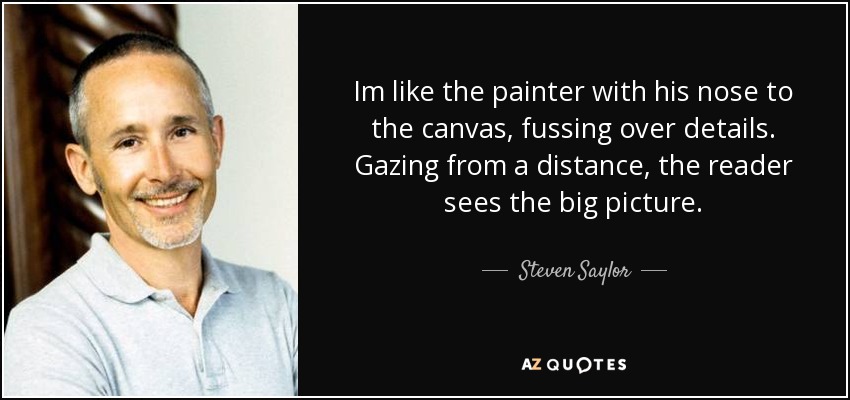
Im like the painter with his nose to the canvas, fussing over details. Gazing from a distance, the reader sees the big picture.
Libraries made me - as a reader, as a writer, and as a human being.
I was quite a reader before I became a writer.
Among those whose reputation is exhausted in a short time by its own luxuriance are the writers who take advantage of present incidents or characters which strongly interest the passions, and engage universal attention. It is not difficult to obtain readers, when we discuss a question which every one is desirous to understand, which is debated in every assembly, and has divided the nation into parties; or when we display the faults or virtues of him whose public conduct has made almost every man his enemy or his friend.
The real tight interface is between the book and the reader-the world of the book is plugged right into your brain, never mind the [virtual reality] bodysuit.
A book is a human fact; a great book like Seraphita gathers together numerous psychological elements. These elements become coherent through a sort of psychological beauty. It does the reader a service.
A Wired reader told me once, Get a life, which I read from the back of a yacht in the Aegean, while eating fresh sea urchins and drinking terrific Montrachet.
I have always believed that poems beg to be read aloud, even if the reader is in a world all her own.
My readers are 90 percent gay, and it's who I write for. I am not here to entertain straight people.
Journalism's ultimate purpose is to inform the reader, to bring him each day a letter from home and never to permit the serving of special interests.
From all these experiences the most important thing I have learned is that legibility and beauty stand close together and that type design, in its restraint, should be only felt but not perceived by the reader.
An autobiography should give the reader opportunity to point out the author's follies and misconceptions.
There was a time when the reader of an unexciting newspaper would remark, 'How dull is the world today!' Nowadays he says, 'What a dull newspaper!'
The careful reader of the New Testament will find three Christs described: - One who wished to preserve Judaism - one who wished to reform it, and one who built a system of his own
What a writer brought to a book didn't matter as much as what the reader contributed.
Your reader is at least as bright as you are
I have often wondered how anyone who does not read, by which I mean daily, having some book going all the time, can make it through life. Indeed if I were required to make a sharp division in the very nature of people, I would be tempted to make it there: readers and nonreaders of books... It is astonishing how the presence or absence of this habit so consistently characterizes an individual in other respects; it is as though it were a kind of barometer of temperament, of personality, even of character. Aside from that, for me it constituted something like sanity insurance.
Such reproductions may not interest the reader; but after all, this is my autobiography, not his; he is under no obligation to read further in it; he was under none to begin. A modest or inhibited autobiography is written without entertainment to the writer and read with distrust by the reader.
The intelligent perusal of fine games cannot fail to make the reader a better player and a better judge of the play of others.
Once a poet calls his myth a myth, he prevents the reader from treating it as a reality; we use the word "myth" only for stories we ourselves cannot believe.
The most intelligent inspection of any number of fine paintings will not make the observer a painter, nor will listening to a number of operas make the hearer a musician, but good judges of music and painting may so be formed. Chess differs from these. The intelligent perusal of fine games cannot fail to make the reader a better player and a better judge of the play of others.
The best leaders are readers of people. They have the intuitive ability to understand others by discerning how they feel and recognizing what they sense.
Don't dumb down; always write for your top five percent of readers.
You can solve most of your writing problems if you stop after every sentence and ask: what does the reader need to know next?
I work on the assumption, or let it be the fear, that the reader will stop reading if I stop being interesting.
Follow AzQuotes on Facebook, Twitter and Google+. Every day we present the best quotes! Improve yourself, find your inspiration, share with friends
or simply: