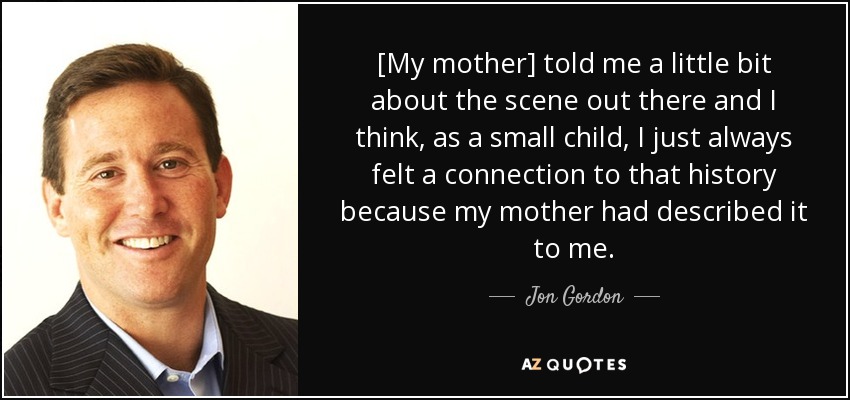
[My mother] told me a little bit about the scene out there and I think, as a small child, I just always felt a connection to that history because my mother had described it to me.
I think we're in a time and place, the last 20 plus years, and certainly now, it's only more so, where it's just about us creating a body of work. Creating hopefully our own scene.
I remember [Joe] Lovano came around to me at that time [of Monk competition]. And I had taken some lessons with Joe and I had seen Joe on the scene. He had always been so great to me, such and inspiration and so kind. One lesson that I had with Joe was just amazing. I'm just such a fan and an admirer of his on every level. He was like, "Don't worry... you're just out here. You just do what you're doing. Don't worry if it doesn't make you a household name or anything."
LSD is no longer playing a bad role in the drug scene and psychiatrists are again trying to submit their proposals for research with this substance to the health authorities. I hope that LSD will again become available in the normal way, for the medical profession. Then it could play the role it really should, a beneficial role.
The rewriting is always crucial to what I do; whenever I do a scene, I always tell myself that this isn't final and that I can do it again, better. The pacing is probably from experience. I've always liked gradual disclosure. I keep thinking of my rubber-band theory. You have a rubber band that you keep pulling and pulling and pulling, and just at the moment of snapping you release it and start another chapter and start pulling again.
I use a lot of similes and metaphors when I work, simply because it's my best way of describing a building or a scene. I'm terrible at describing landscapes - trees, buildings. The inanimate things don't interest me: I always think, "Oh, no, here comes another building I have to describe." So I usually use a simile or metaphor.
I don't like to think in terms of writing ten or twelve pages a day. Usually I'm writing a scene, and it's always with the idea, "I wonder what is going to happen." Or sometimes I write about something that affected me emotionally the day before and that I don't want to lose. I'm very unorganized at first; but finally it comes into a structure where consciously I'm working on a novel per se.
I'm a visual filmmaker so the camera is a big part of my storytelling tool and it's something that I really rely on to tell a scene or create the suspense that I need and create the emotion of a scene or a sequence.
Right after the 9/11 attacks I was living near Oakland in California with a buddy who had also grown up in the skate/punk scene of the 80s. We were so shell-shocked from the attacks that we sort of regressed into this childlike mode of filling our apartment with '80s memorabilia. We got all of our favorite skateboard decks off of eBay, bought a bunch of old independent trucks, we got a credit card so that we could buy 720 off of a videogame vendor, we sat around listening to T.S.O.L. and The Misfits playing 720 and pretending that we were still living in our childhood.
That's a really common trap that people in small scenes will start to rely on. They'll have all this material joking about that place, and then take a trip to Atlanta or whatever, and be like, "Half my act is gone because I can't talk about how everybody has a bicycle."
I grew up being educated by Sesame Street and gained a sense of humor from The Muppet Show. I'd give my right foot to be able to do a scene or two with the Muppets.
I don't walk around talking about my life and spouting my philosophy to people I don't know. I mean, if I get to know them, I'll talk for hours. I guess I like a lower-key scene.
You have to write a song around this specific character or to enhance a specific scene. A lot of other craft goes on.
What characterized the whole punk scene for me in 1977 was there was no racism or sexism. It was an anarchy of -isms, and a matter of abolishing it all.
I struggle to watch myself in any scene, to be honest. What's done is done. I wish I was able to watch myself, as it would really help me develop as an actor. But I'm not brave enough. It's a difficult thing to do - looking at yourself as this utterly different person on a screen.
The entire behind the scenes of Saturday Night Live are all Canadian.
Usually you'd do the summer scenes in the winter. So you're out there with a T-shirt and hope nobody sees your air that you're breathing out. We put ice cubes in our mouth to stop that from happening.
If the Constitution was a movie, the Preamble would be the trailer, the First Amendment the establishing shot, the 13th the crowd pleaser and the 14th the ultimate hero scene.
The camera does not know what it takes; it captures materials with which you reconstruct, not so much what you saw as what you thought you saw. Hence the best photography is aware, mindful, of illusion and uses illusion, permitting and encouraging it - especially unconscious and powerful illusions that are not usually admitted on the scene.
When you're accustomed to doing stand-up, so often you're the only person onstage and it's all your thing. It's very gladiatorial. Obviously, when you're in a scene with somebody, you're supposed to listen and react - and that's a bit of a transition.
Just to be seen strolling to or from a helicopter on the White House lawn, shouting an evasive answer to Sam Donaldson, must seem to the Reagans not quite satisfactory enough of a 7 PM presence, and this inane scene certainly galls the press.
When you say documentary, you have to have a sophisticated ear to receive that word. It should be documentary style, because documentary is police photography of a scene and a murder ... that's a real document. You see, art is really useless, and a document has use. And therefore, art is never a document, but it can adopt that style. I do it. I'm called a documentary photographer. But that presupposes a quite subtle knowledge of this distinction.
During the time that my recording career seemed to be in a slump a music called disco came on the scene and literally took over radio stations as well as having radio stations created to play it which sort of negated my music as well as that of some of my peers.
Angie [Harmon] is a beautiful and stunning woman, and we both have really good qualities that complement each other. We both look very different and we have different energies, but it really works. We're lucky. When we do scenes together, I do feel like there's a certain magic that you can't always say happens.
The reason that I'm here is that Patrick and I are partners and when crazy stuff comes our way we'll sit down and brainstorm and think around it just like we do when we're thinking about a scene. So, while the masters might not understand my being here, or at least they didn't at first, but they do now because we really are a partnership. If he's on set I'm on set.
Follow AzQuotes on Facebook, Twitter and Google+. Every day we present the best quotes! Improve yourself, find your inspiration, share with friends
or simply: