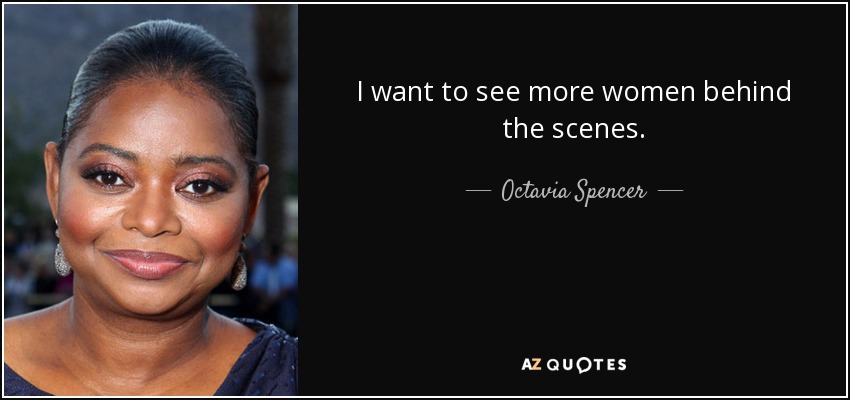
I want to see more women behind the scenes.
I began to see, again and again, stories that were first confusing and second where the emotional impact was muted because the big scene came before the explanation of what was going on. There was a reverse chronological order as well as a concealment of what exactly was going on. I think often that comes out of the fear of being boring, and sometimes I think it's just an attempt to seem clever.
[Jack Johnson] became a superstar and started his own record label, and then he made and produced my first record, he co-wrote the songs on there, and then he let me open up for him for two years all around the world. And that was like the best start I could've had, the best way I could've started in the music scene.
That was like the best start I could've had, the best way I could've started in the music scene. I owe [Jack Johnson] a lot for the beginning of my career and setting me off on the right path, and that's the coolest thing that ever could've happened.
Everybody was cratered after Copenhagen. If the movie had worked the way that it should have, if it had been scripted by Holywood, the world would have come together and addressed the biggest problem it ever had faced and delegates would have embraced each other, and it all would have been a good happy scene instead of the complete farce and debacle that it turned into - maybe in certain ways, an absolute low point for human diplomacy.
I don't think I've succeeded in making any really good films. There are moments, scenes, whole movements that sing. It has all added up to a cinema of sorts, even though I'm still learning my art.
The matter is - we are actors playing roles [in Planet Apes] and they happen to be in this instance apes but there's no difference. In the scenes that we're playing, if we were to block out the scenes as actors in costumes, it would be no different.
Animators do amazing working translating and interpolating the characters [in the Planet of the apes], the facial performances. What we're creating on set - if you don't get it on the day, in the moment, on set, in front of the camera, with the director and the actors. The emotional content of the scene and the acting choices.
There are a lot of layers in the film [Dream of Life]. And during editing we would try to tame all the layers, try to make things a little bit more understood. We would move scenes around. We'd try all these things.
If you mess up the performance on stage, you do it again the next night. You're like alright, you let yourself off the hook, and you've got to go back in there. Whereas, with a film, I would go home and be like, "Well, I've ruined the arc of the character forever. That scene is never going to work. I know because I can never shoot it again." So, it's all miserable, but in different ways.
We [with John Logan] started talking about The Searchers, and then he went on to tell me a story about when he first met John Wayne, and he said, "Hey, you be me and I'll be Wayne," and I said, "No, let me be Wayne!" Anyway, it was a very pleasant conversation, it was clear to him that I was a big movie fan, and by the time I got home, there was a phone call, asking if I'd mind doing one scene in the movie [The Aviator].
I'm, like, y'know, I didn't have a problem doing one scene in Dude, Where's My Car? I'm certainly not going to have a problem doing one scene in a [Martin] Scorsese movie!
It was a fabulous experience shooting [in the Aviator], working with Leo [DiCaprio] and Danny Huston in the scene. It was great. I think what was most eye-opening about it was that [Martin] Scorsese was just like any good director you work with.
For me, that was a hard scene [in "Fences"] to do twenty-something times, which (laughing), I counted. That was difficult, but once I did it, I felt like I could do anything.
I would like to say something deeper, but for me, I saw a production of "Fences" in Rhode Island and a fabulous actress played Rose, but when she first came on the stage she was mad. You could just see it. She was all, "Troy stop!" So by the time you get to the revelation scene, I didn't think she loved him, so there was no loss. I think that the real tragedy and the real drama or the thing that makes you lean in is to see the love, to see the commitment. To see the fact that Rose is invested in this marriage no matter what.
We're creating a TV show of Scrooge, starring Jamie Farr, with Buddy Hackett as Scrooge. We're shooting in this Victorian set for weeks, and Hackett is pissed all the time, angry that he's not the center of attention, and finally we get to the scene where we've gotta shoot him at the window, saying, "Go get my boots," or whatever. The set is stocked with Victorian extras and little children in Oliver kind of outfits, and the director says, "All right, Bud - just give it whatever you want." And Hackett goes off on a rant. Unbelievably obscene.
[Jack Nash] was very different than anything I'd played. In fact, there's a scene I have in a tent with Louis Ferreira, who just did an episode of Travelers. He was in the fourth episode of Travelers playing another team leader, and we really have it out, not unlike the way we did in the tent in Andromeda.
Sometimes I make films about scenes other filmmakers would leave out, so I just make the film out of all the things they wouldn't put in. Poetry allows you to do this more than prose, for example.
As an insecure writer, I'll finish a scene and worry there's a better version of it. Or it could be elevated somehow.
Gareth [Edwards] was very much about including everyone in what we were making, so he would cut together different scenes to show us what we were making. And the crew, cast, everyone would go into a theater there at Pinewood Studios and watch 10 minutes of what we were making. It was always so exciting. It looked amazing, and the music was huge.
[Martin Scorsese ] basically works just like any other director. You work the scene, you try to find what's best in it and make it work. That's what it was like.
I personally like a little rehearsal, not if I'm gonna have a super emotional scene you wanna have it be a fresh thing.
[Deadpool] is definitely squirm-inducing. It's a pretty hard R, violence-wise. But cartoony, also. Maybe fast-forward through to torture scenes.
I don't want to give any lines to anybody because otherwise they come out like bricks from their mouths. The important thing is the meaning of the scene, not the words you use, and I prefer that you find your own words to express the scene.
I was like, I can't believe I get to be in a scene with Meryl Streep [in Florence Foster Jenkins]! And then I was like, but why do I have to play Chopin? It's already going to be intimidating.
Follow AzQuotes on Facebook, Twitter and Google+. Every day we present the best quotes! Improve yourself, find your inspiration, share with friends
or simply: